East Nash Street

Snaps, no. 29: Unknown man.

This photograph is labeled “520 E. Nash, Wilson.” The subject is unknown, and the image appears to date from the 1940s. The 1941 Wilson city directory lists at that address a billiard parlor operated by Hally A. Armstrong. (The current three-storefront building at that address was built in the late 1950s and has been occupied by variety stores and beauty shops.)

[Update: this is a John H. Baker portrait.]

Photograph courtesy of Paul Ashford, from a collection belonging to his grandmother Reka Aldridge Ashford Morrisey of Eureka, Wayne County.

Shade’s Pharmacy.

Shade 1949

Son and father Kenneth M. and Isaac A. Shade, pharmacists, in front of Shade’s Pharmacy, 527 East Nash Street, 1949. Photograph courtesy of Kenneth M. Shade, Jr.

——

On 29 November 1898, Isaac A. Shade, 23, of Buncombe County married Emma Green, 21, of Buncombe County in Buncombe County.

Asheville Daily Gazette, 2 December 1898.

In the 1900 census of Asheville, Buncombe County: at 174 Haywood Street, Isacc Shade, 24, laborer; wife Emma, 29; and children John, 7 months; and mother Alice Shade, 40.

In the 1910 census of Asheville, Buncombe County: on Jordan Street, Isacc Shade, 34, physician at drugstore; wife Emma, 22; son John, 10, Alice, 8, and Kenneth, 3; and widowed roomer Ollie Burgin, 41.

Emma Green Shade died of typhoid fever 6 Jan 1911.

In December 1912, Isaac Shade married his second wife, Estella Lane Shade of Pocomoke City, Maryland. The couple settled in Raleigh, North Carolina, where Shade had established his own pharmacy.

New York Age, 31 July 1913.

Isaac Albert Shade registered for the World War I draft in Wilson on 12 September 1918. Per his draft card, he lived at 110 Pender Street, Wilson; was born 17 May 1876; was a self-employed druggist at 530 East Nash Street, Wilson; and wife Estella Shade was his nearest relative.

In the 1920 census of Wilson, Wilson County: at 535 Nash Street, Turner Stokes, 50, carpenter; wife Morah, 39; mother-in-law Martha Pitt, 83; and boarders Isac Shade, 44, drugstore manager; wife Estella, 38; and children Kenneth, 13, and Sarah, 9.

In the 1940 census of Wilson, Wilson County: at 602 Green Street, drugstore owner Dr. I.A. Shade, 63; wife Estelle, 54, city school teacher; niece Myrtle Lane, 23, county school teacher, and nephew George Lane, 21, drugstore clerk; and roomers Louisa [illegible], county school teacher, Vera Green, 18, housekeeper, and Catherine Ward, 20, county school teacher.

Undated photo of Shade’s Drug Store, 527 East Nash Street, courtesy of Delores Thomas, reprinted from Wilson Daily Times, 22 February 2008.

Isaac Albert Shade died 24 April 1953 at his home at 602 East Green. Per his death certificate, he was born 17 May 1875 in Morington [Morganton], North Carolina, to London Shade and Alice (last name unknown); was married; and was a pharmacist at a drugstore. Sarah Shade was informant.

Seventy-Second Annual Report of the North Carolina Board of Pharmacy (1953).


Uptown, 1930.

As detailed here and here, the blocks of East Nash Street between the railroad and Pender Street were home to Wilson’s black commercial district. Pages 285-336 of 1930 edition of the Wilson, N.C. City Directory offers a detailed listing of the businesses on these blocks. (There were a baker’s dozen residences, too — all save one black-owned or -occupied. One was a boarding house, and half the others included unrelated lodgers.) Though primarily owned by African-Americans, white businesses — several run by immigrant Syrians or Greeks — and a Chinese laundry also operated in the district.

Though they could not buy a dress or deposit a check* or consult a lawyer on their side of town, East Wilson did not have to cross the tracks to see a movie, get their shoes shined or repaired, get a haircut (four barbers), buy eggs and butter (eight groceries, including a corporate chain), grab a cup of coffee and a slice of pie (six cafes and restaurants), select fresh fish, get a suit altered or pressed, play billiards, straighten a bicycle frame, buy or repair furniture, consult a doctor or dentist (two of each), get a prescription filled (two pharmacies), have their hair straightened, sample fresh-made candy, attend a lodge meeting (three), book a hotel room, replace a watch band, pay on insurance policy, fill a gas tank, or bury their dead.

Though this entry suggests otherwise, the theatre’s building was actually east of the tracks. In the residential listing of the 1930 Wilson city directory, George C. Woller is listed as the proprietor of the Lincoln.

A C L R R intersects

In the residential listing of the 1930 Wilson city directory, Cutt Davis and James Mack are listed as proprietors of the Baltimore Shoe Shop.

  • 420 1/2 McNeill & Hargrove (c) barbers

In the residential listing of the 1930 Wilson city directory, Angus A. McNeill and John Hargrove are listed as the proprietor of the Lincoln. In the 1930 census of Wilson, Wilson County: at 1202 Wainright, Angus McNeil, 40, barber; wife Maggie, 25; and daughter Agnes E., 6.

  • 421 Kannan Thos S gro

In the 1930 census of Wilson, Wilson County: at 208 Pine Street, Syrian-born widow Shely Kannan, 48, saleslady in a dry goods store, with children Ellis, 28, dry goods store manager, Albert, 22, dry goods store salesman, Thomas, 18, fruit stand salesman, and Rosa Lee, 16. The older two children were also born in Syria.

  • 423 Star Cafe

In the residential listing of the 1930 Wilson city directory, Gost Glearmis is listed as the proprietor of the Star.

Pettigrew intersects

  • 500 Gatlin Amos J & Co gro

In the 1930 census of Wilson, Wilson County: at 220 Railroad Street, grocery merchant James P. Gatlin, 66; wife Patty, 68, saleslady; son Amos J., 29, salesman; daughter-in-law Edna, 24; grandchildren Amos Jr., 6, Constance, 4, Patricia, 3, and Dorthy, 9 months.

  • 501 Maynard’s Mkt gro

In the residential listing of the 1930 Wilson city directory, George W. Maynard is listed as the proprietor of this grocery and another at 401 Stantonsburg.

  • 503 Barnes Rachel G (c) restr

In the 1930 census of Wilson, Wilson County: at 1118 East Nash Street, Johnie Barnes, 33, cafe proprietor; wife Rachel G., 35, cafe cook; cousin Leotha Clark, 22, cafe waitress; and roomer Henrietta Walker, 28, cafe waitress.

  • 504 Verser Jesse W

In the 1930 census of Wilson, Wilson County: at 504 East Nash Street, grocery store proprietor Jessie W. Verser; with Annie, 36; daughters Ethel, 10, and Thelma, 7; and mother Bertha, 71.

  • 505 Barnes John (c) barber

John Barnes was husband of Rachel G. Barnes, above.

  • 506 Wah Jung lndy

Wah Jung Laundry appears in Wilson city directories as early as 1912. In the 1930 residential listing, its proprietor was listed as Yee G. Wah.

  • 507 Ziady Jos gro

Per the 1928 Wilson city directory, Ziady’s establishment was called Nash Candy Kitchen. He resided nearby at 107 South Pettigrew Street.

  • 508 Service Barber Shop (c) Artis Ernest A (c)

In the 1930 residential listing: Artis Ernest L (c) (Louise) (Service Barber Shop) h 404 N Vick

  • 509 1/2 Stokes Thos (c) fish

In the residential listing of the 1930 directory: Stokes Thos (c) (Babe) fish 509 1/2 Nash h 615 W Wiggins

  • 511 Lupe Peter (c) shoe shiner
  • 512 Braswell Ezekiel (c) rest

In the 1930 census of Wilson, Wilson County: at 1120 East Nash Street, Ezekiel Braswell, 38, cafe proprietor; wife Mary, 29, public school teacher; daughters Mary E., 5, and Parthenia, 3; and roomer Matilda Cherry, 26, teacher.

  • 514 Lesley Saml G (c) tailor

In the 1930 census of Wilson, Wilson County: at 802 Manchester Street, Ohio-born tailor Samuel G. Lesley, 28; Virginia-born wife Lillian, 24; and children Denis, 8, Robert, 6, Samuel Jr., 4, and John W., 3.

  • 517 Moore John H (c) shoe repr

In the 1930 census of Wilson, Wilson County: at 1113 Atlantic Street, cobbler John H. Moore, 45; wife Annie, 31; and children Lena, 13, Carl, 11, John, 9, Anna G., 7, Odessia B., 3, and Ruth, 1.

  • 519 Phillips Chas P bicycle repr

In the residential listing of the 1930 directory: Phillips Chas P (Minnie A) bicycle repr 519 E Nash h 410 Herring Ave

  • 520 Dixon Lenora (c) billiards

Though Lenora Dixon appears in the 1930 city directory under her maiden name, living at 611 Nash, on 9 December 1929, she married Daniel Carroll in Wilson. In the 1930 census of Wilson, Wilson County: Daniel Carroll, 27, barber in Hines shop; wife Lenora, 27, no occupation; and adopted daughter Hattie L., 9.

  • 521 Smith Preston (c) clothes clnr

In the 1930 census of Wilson, Wilson County: at 314 Stantonsburg Street, tailor Preston Smith, 42; wife Minnie, 30; sons Henry, 17, and Vernon, 10; and roomers Henry Edwards, 40, and Anna B. Edwards, 18, both tobacco factory laborers.

  • 522 Atkinson Henry (c) shoe repr
  • 523 Wooten W L Co furn

In the residential listing of the 1930 directory: W L Wooten Co Inc, H Paul Yelverton pres, Jesse W Thomas v-pres, Wm L Wooten sec-treas, furn 523 E Nash.

In the 1930 census of Wilson, Wilson County: at 805 East Nash, physician Matthew S. Gilliam, 45; wife Annie L., 42; and children Charles A., 17, Matthew, 15, Emily, 13, George T., 12, and Herman, 10. In the 1930 residential listing of the city directory: Howard Mary (c) lndrs h 524 E Nash.

In the 1930 census of Wilson, Wilson County: at 719 East Green Street, barber Charles S. Thomas, 48; wife Blanch, 48; nephew-in-law George W., 22; adopted daughter Cora, 22; and adopted son Lee Roy, 11.

  • 526 Coleman Mattie B (c)

Mattie B. Coleman managed a boarding house at 526 East Nash. At that address in the 1930 census of Wilson, Wilson County: paying $12/month in rent, widow Carrie Shaw, 48; and children Robert, 21, dry cleaning plant laborer, Cornie, 20, laundress, Louise, 18, private nurse, Jovester, 17, Aline, 15, and Nettie R., 12. Also paying $12/month, Dave Harris, 32, guano plant laborer; wife Bessie S., 27, laundress; and children Timothy, 12, Roy, 10, Ardria M., 8, Roland, 5, Odessa, 3, and Herman, 1. Also paying $12/month, boarding house keeper Mattie B. Coleman, 25; tobacco factory stemmer Enemicha Kent, 20; tobacco factory stemmer Carrie M. Shine, 22, and Callonia Shine, 15; wholesale grocery delivery boy Mitchel Hamon, 24, and wife Ella, 17; restaurant dishwasher James Nelson, 21; laundry ironer Irene Rountree, 27; and cook Maggie Downing, 26.

In the 1930 census of Wilson, Wilson County: at 528 East Nash, widowed seamstress Sarah L. Bowden, 59; divorced restaurant cook George Lee, 24; and widower barber George Sledge, 51.

  • 529 Coppedge Sarah (c)

In the 1930 census of Wilson, Wilson County: widow Sarah Coppedge, 36, laundress; lodgers James Ellec, 27, cook, and Mary Taylor, 30; son-in-law James Barnes, 26, coal company truck driver; daughter Verlie L., 20; and relative Frank, 21, tea room cook.

  • 530 Stokes Turner (c)

In the 1930 census of Wilson, Wilson County: building carpenter Turner Stokes, 60; wife Mattie, 38, laundress; and roomers Mary Barnes, 16, and Lillian Dedman, 17.

  • 531 Swindell Deborah (c) hair drsr

In the 1930 census of Wilson, Wilson County: at 630 East Suggs Street, beauty parlor helper Debbie Swindell, 40; widow Effie Lewis, 35, servant, and children Essie M., 10, Mathew, 8, and William J., 4; and daughter Deborah Swindell, 6.

  • 532 Uzzell Henry (c) furn repr

In the 1930 census of Wilson, Wilson County: at 503 Viola Street, cafe cook Henry Uzzell, 48; wife Almira, 43; and children Eliza, 20, servant, Corine, 17, Mable, 16, Eva May, 11, James, 9, and Corrie, 6.

  • 533 Taylor Bertha (c)

In the 1930 census of Wilson, Wilson County: divorced laundress Bertha Taylor, 33.

  • 534 Bynum Mack (c)

In the 1930 census of Wilson, Wilson County: at 534 East Nash, tobacco factory machinist Mack Bynum, 48; and children Mildred, 20, school lunchroom cook, and Mary, 17; son-in-law Richard Saunders, 25; daughter Catherine, 23; and grandson Walter, 6 months. Also, South Carolina-born odd jobs laborer Anthony Ashley, 48; wife Sarah D., 30, a tobacco factory stemmer; and children Willie G., 10, Leo, 8, Eugenia, 6, and Joseph D., 2 months; restaurant cook Marshal McCommick, 23; hardware delivery man Fletcher Lassiter, 25; and embalmer Daniel McKeathan, 30.

  • 535 Najim Geo candy mfr

Najim resided at 107 South Pettigrew. See Joseph Ziady, above.

In the 1930 census of Wilson, Wilson County: Methodist minister Russell B. Taylor, 48, widower; and children Laura, 14, Sarah, 11, Christopher, 7, and William, 4; daughter Beatrice Barnes, 18, teacher, and her son Elroy Barnes Jr., 1; Cora Speight, 49; laundress Mamie Williams, 30; and Roscoe McCoy, 32.

  • 537 Lucas Wm T gro

In the 1930 census of Wilson, Wilson County: at 216 Railroad Street, Will T. Lucas, 56, grocery store merchant; wife Sallie, 42; son Leon, 22; daughter-in-law Dorthy, 22; children Will Jr., 7, and Sarah F., 3; and granddaughter Betsy G., 1.

In the 1930 census of Wilson, Wilson County: Virginia-born druggist Darcey C. Yancey, 46; wife Lelia B., 40; and daughter Maude, 9.

In the 1930 census of Wilson, Wilson County: Albert Mitchel, 52; brother Floyd Mitchel, 47; and roomers Settie Hardy, 56, housekeeper, and Jaunita Nevells, 23.

  • 541 Whitley Hotel; Marshall Lodge, No 297, IBPOE

In the residential listing of the 1930 Wilson city directory, Maggie A. Whitley is listed as the proprietor of this hotel.

  • 542 Brewington Edward C (c)

In the 1930 census of Wilson, Wilson County: transfer driver Eddie Brewington, 32; wife Mary, 32, laundress; and hospital nurse Alice Tyler, 69.

  • 543 Jones Luther J (c) restr

In the 1930 census of Wilson township, Wilson County: on Mason Street, seamstress Lula Herring, 25, and boarder Luther Jones, 38, cafe manager.

  • 544 Baker Easter (c)

In the 1930 census of Wilson, Wilson County: widowed laundress Esther Baker, 64; son Jim, 24, tobacco factory laborer; cafe dish washer George Coley, 32; and Fred Hancock, 43.

  • 545 Ford clnrs; Best John (c) clothes presser

In the residential listing of the 1930 Wilson city directory, Herbert H. and Alf J. Ford are listed as the proprietors of Ford cleaners. Also, Best John (c) (Sylvia) clothes presser h 106 Ashe.

  • 546 Rogers John W (c)

In the 1930 census of Wilson, Wilson County: dry goods store janitor John W. Rogers, 57; wife Mary R., 47; adopted son Leonard G., 7; and niece Ernestine Atkinson, a teacher.

  • 547 Am Legion, Henry Ellis Post (c); IOOF, Hannibal Lodge, No 552 (c)
  • 548 Barbour Nannie (c) clo presser

In the residential listing of the 1930 Wilson city directory, Barbour Nannie (c) clothes presser 548 e Nash h 1005 Atlantic.

  • 549 Fahad Kattar billiards

Census and other records indicate that Fahad, born in Syria or Lebanon, was primarily a resident of New Bern, North Carolina.

  • 551 Rutherford Geo (c) restr

In the 1930 census of Wilson, Wilson County: at 104 [sic; 804] Green Street, Georgia-born cafe proprietor George Rutherford, 45, and wife Maggie, 31, waitress.

  • 552 Alston Robert T (c) watch repr

In the residential listing of the 1930 Wilson city directory: Alston Robet T (c) watch repr 552 E Nash h do

  • 552 1/2 Wilson Dye Works (br)

In the residential listing of the 1930 Wilson city directory, Luther W. High is listed as the proprietor of this branch of the dye works.

  • 553 Peacock & Locus undtkrs

In the residential listing of the 1930 Wilson city directory, Levi H. Peacock Jr. and Luther Locus are listed as the proprietors of this undertaking establishment. However, in the 1930 census of Wilson, Wilson County: at 1108 Wainwright, cook Luther Locus, 37, wife Eula, 37, also a cook, and son Robert, 16. And at 204 Vick Street, hotel bellboy Levi Peacock, 30; wife Elouise, 28, a public school teacher; children Jewel D., 4, and Thomas L., 14; and mother-in-law Etta Reaves, 50, post office maid.

  • 554 Baxter & Co gros

In the residential listing of the 1930 Wilson city directory, Herman W. Baxter and James F. Downing are listed as the proprietors of this grocery.

Stantonsburg intersects

In the 1930 census of Wilson, Wilson County: at 900 Atlantic Street, cafe proprietor Jim Allen, 45; wife Rachel, 32, a private nurse; and children Elouise, 10, and Fred, 8; and lodgers Floyd Baker, 26, farm laborer, Gertrude Kannary, 27, cook, and Katherine, 10, Dortha, 7, and Elouise Baker, 1.

In the 1930 census of Wilson, Wilson County: at 604 East Green, Baptist minister Fred M. Davis, 60; wife Minie, 49; daughter Addie, 25, teacher; and Bermuda-born son-in-law George Butterfield, 27, dentist.

Darcy C. Yancey, above, was proprietor of Ideal Pharmacy.

In the residential listing of the 1930 Wilson city directory: Mitchner Wm A (c) phys 565 E Nash h 604 E Green.  Winston Mutual Life Insurance Company was established in 1906 by African-American business and civic leaders to provide health and accident insurance for Winston-Salem’s African-American tobacco workers.

  • 567 Battle Harry (c) restr

In the residential listing of the 1930 Wilson city directory: Battle Harry (c) restr 567 E Nash r 902 do.

In the 1930 census of Wilson, Wilson County: Columbus Artis, a merchant/undertaker, wife Ida [Ada], and niece Gladys Adams. Artis owned the house at 308 Pender Street, valued at $4000.

Pender intersects

  • 600 Triangle Filling Sta

In the residential listing of the 1930 Wilson city directory, William H. Taylor is listed as the proprietor of this gas station.

  • 601 Boykin Dorsey G filling sta

In the residential listing of the 1930 Wilson city directory: Boykin Dorsey G (Virginia L) filling sta 601 E Nash h 208 W Green.

  • 603 Simpson Fannie (c)

In the 1930 census of Wilson, Wilson County: Fannie Simpson 60, widow.

  • 605 Parker Eli (c)

In the 1930 census of Wilson, Wilson County: at 605 East Nash, fertilizer plant laborer Bob Snow, 29; wife Elberta, 27; and children Beulah, 11, John, 8, Albert, 6, and Edgar, 1. Also, oil mill laborer Elye Parker, 29, and wife Pearl, 27, cook.

  • 607 Smith Wm (c)

In the 1930 census of Wilson, Wilson County: bakery laborer Willie Smith, 27; wife Ada, 24; and brother Oscar, 18, bakery laborer; widow Mary Williams, 45, cook, and son Robert, 28, tobacco factory stemmer.

In the 1930 census of Wilson, Wilson County: at 111 Pender Street, Charles H. Darden, 76, undertaking proprietor; wife Mary E.; and Cora Brown, 22, drugstore clerk.

*Black-owned Commercial Bank closed abruptly amid scandal in 1929.


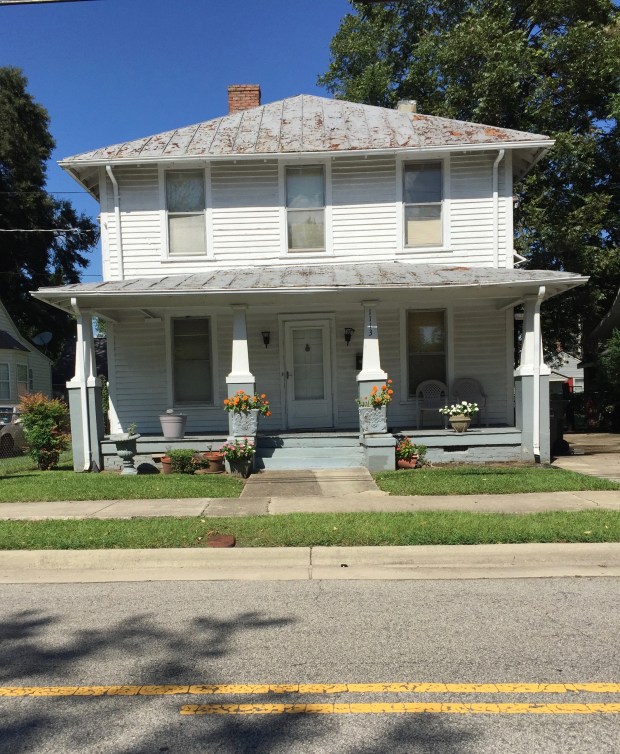
1113 East Nash Street.

The thirty-eighth in a series of posts highlighting buildings in East Wilson Historic District, a national historic district located in Wilson, North Carolina. As originally approved, the district encompasses 858 contributing buildings and two contributing structures in a historically African-American section of Wilson. (A significant number have since been lost.) The district was developed between about 1890 to 1940 and includes notable examples of Queen Anne, Bungalow/American Craftsman, and Shotgun-style architecture. It was listed on the National Register of Historic Places in 1988.

IMG_1679.jpg

As described in the nomination form for East Wilson Historic District: “1927; 2 stories. Parsonage, Jackson Chapel Baptist Church; cubic, hip-roofed, is blend of Colonial Revival and bungalow traits, typical of a host of middle-class dwellings in district built during 1920s.”

In the 1930 Wilson city directory: Jordan Benj F Rev (c) (Maggie L) pastor First Bapt Ch h 1113 E Nash.

In the 1930 census of Wilson, Wilson County: at 1113 East Nash Street, minister Benjiman Jorden, 50; wife Maggie, 44; and children Benjiman F., 16, Mary B., 14, Milford L., 12, Odis, 11, Willard, 10, Irene C., 8, and James D., 6.

In the 1940 census of Wilson, Wilson County: at 1113 East Nash Street, renting for $20/month, W.P.A. project laborer Oscar Ellis, 50; wife Mamie, 48; children Henry, 23, laborer, Estell, 22, housekeeper, Aja, 21, waiter, Charles, 20, deliveryman for Moore’s Drug, James, 18, Bessie, 17, Herbert, 15, Leroy, 13, Fred, 8, Mamie, 10, and Clarence, 5; and adopted children Annie, 15, and Rosco Jones, 13.

Photograph by Lisa Y. Henderson, September 2017.

1009 East Nash Street.

The thirtieth in a series of posts highlighting buildings in East Wilson Historic District, a national historic district located in Wilson, North Carolina. As originally approved, the district encompasses 858 contributing buildings and two contributing structures in a historically African-American section of Wilson. (A significant number have since been lost.) The district was developed between about 1890 to 1940 and includes notable examples of Queen Anne, Bungalow/American Craftsman, and Shotgun-style architecture. It was listed on the National Register of Historic Places in 1988.

IMG_1676.jpg

As described in the nomination form for East Wilson Historic District: “ca. 1930; 2 stories. Cubic, hip-roofed house with bungalow-type porch posts; central-hall plan.”

In the 1930 Wilson city directory, cook Nannie Best, laundress Frankie Best and seamstress Eliza Best are listed as residents of 1009 East Nash Street.

In the 1940 census of Wilson, Wilson County: Nan Best, 75, widow; daughter Frankie, 55; and grandsons William, 19, and Audrey, 15.

In 1942, Aaron Best registered for the World War II draft in Wilson:

Nannie Best died 18 June 1948 in Wilson. Per her death certificate, she was born 11 June 1865 in Greene County to Aaron Best [this is an error; Aaron was her husband, not father] and Evelyn [last name unknown]; resided at 1009 East Green Street; and was buried in Rountree Cemetery. Aaron Best, 1009 East Nash Street, was informant.

William Aaron Best died 21 August 1949. Per his death certificate, he was born 21 September 1900 in Wilson County to Aaron and Nannie Best; was a widower; and worked as a laborer for Export Tobacco Company. Audrey Best, 1009 East Nash, was informant.

805 East Nash Street

The eleventh in a series of posts highlighting buildings in East Wilson Historic District, a national historic district located in Wilson, North Carolina. As originally approved, the district encompasses 858 contributing buildings and two contributing structures in a historically African-American section of Wilson. (A significant number have since been lost.) The district was developed between about 1890 to 1940 and includes notable examples of Queen Anne, Bungalow/American Craftsman, and Shotgun-style architecture. It was listed on the National Register of Historic Places in 1988.

img_0616

As described in the nomination form for the East Wilson Historic District: “ca. 1922; 1 [sic, 2]; Dr. Matthew Gilliam house; one of the district’s fine Colonial Revival houses, including typical cubic form, hip roof, and simple detail; distinguished by wraparound porch wit classical columns; Gilliam was a physician and owned rental property on Nash and Ashe Streets.”

Dr. Gilliam died of knife wounds sustained when he confronted one of his tenants. 805 East Nash Street has long been occupied by Edwards Funeral Home, which added a wing on the east side of the house.

Central Business District: East Nash Street, part 2.

Continued from here.

#64. (former) Dr. W. A. Mitchner’s office, 528 East Nash Street.

This little, two bay wide brick structure was built ca 1936 as the office of Dr. William Arthur Mitchner (1882-1941), one of Wilson’s earliest black doctors. A native of Clayton, North Carolina, he had practices in Wilson from ca 1910 until his death in 1941. The facade has a modern-glass door at the northeast and a large glass window at the southwest. The four windows at the northwest side have been closed. Since Mitchner’s death the building has been occupied successively by three beauty shops.

img_0024

528 Nash Street Southeast.

#65. (former) Hamilton Funeral Home, 532 East Nash Street.

This rather attractive, modest, one-story, double pile house was built ca 1920 for Turner Stokes, a black carpenter, who lost the house during the Depression; while there is no record, it is assumed that Stokes did the construction himself. A rental property during the early and mid 1930s, the house was occupied from 1938 until 1960 by the Wilson branch of the Hamilton Funeral Home of Goldsboro, Levi Hamilton, Proprietor. The house is sheltered beneath a hip roof that is pierced by stuccoed chimneys which have handsome corbeled caps. A three-bay porch with a turned balustrade is carried by turned posts across the three-bay facade. One-over-one windows in plain surrounds and a boxed cornice complete the center hall plan dwelling. A large shed or shed addition with rear porch occupies the rear elevation. In 1960 Hamilton moved to new quarters on Stantonsburg Road. This house has been used for rental since.

Demolished.

#66. United City Cab Stand, 534 East Nash Street.

This tiny, cement blocked, flat-roofed structure was built as a taxi stand ca 1960 on the site of the Mack Bynum house, a ca 1900 two-story house which was torn down in the late 1940s. The ten-by-twelve foot building has a small bathroom extension at the rear and small windows. It has been vacant since 1983.

Demolished.

#67. Artis Barber Shop, 535-537 East Nash Street.

This two-story, two-storefront, cement block commercial building, now hidden behind a pierced aluminum screen and having been given modern glass storefronts in the mid 1960s, was built in the late 1920s as rental property and occupied the site of two frame one-story buildings. The northwest side elevation is blind on the first story and has three modern windows on the second story. The interior has also been remodeled; apartments have occupied the second story since 1938. The 535 store had as its first occupant barber T.J. Honson, who was followed, successively, by Dorothy Garrett’s restaurant, the offices of Dr. William C. Hines, Wade’s Shoe Repair, and, since the late 1960s, Wigarama. The grocery of W.T. Lucas was the first occupant of the 537 storefront. In 1938, Separise P. Artis opened a barbershop here which he still operates. He bought the building in 1944.

img_0038

535, 537 and 539 Nash Street Southeast.

#68. Sutzer-Taylor House, 536 East Nash Street.

Mary Jane Sutzer (___-1929) had this two-story, single-pile house erected ca 1915 in front of a small, one-story dwelling which she had purchased from Alfred Roberson [Robinson]. One of Wilson’s most enterprising black women, she managed the old Union Hotel (razed in the 1930s) at 541 East Nash Street for many years and also operated several restaurants in the 500 block of East Nash Street. The house features a projecting, pedimented central bay and a three-bay porch carried by turned posts that also has a central projection over the steps; a turned balustrade connects the posts. One-over-one sash windows, interior rear brick chimneys and returning boxed eaves complete the house. A transverse, gable-roofed wing with an ell is at the rear of the house. The house has been covered with aluminum siding and is currently used as a rooming house. In the rear yard are two small, four-bay by one-bay, two-room bungaloid houses.

The house was inherited by her son, the Rev. R. Buxton Taylor (1878-1954), who occupied the house until his death. A 1911 graduate of Livingstone College in Salisbury, Taylor later attended Johnson C. Smith University in Charlotte where he received a theology degree in 1918. A minister in the African Methodist Episcopal Zion Church, Taylor served a number of pastorates in North and South Carolina before coming to Wilson in the late 1920s. While in Wilson he taught at the Pinetop School in the County [actually, in Edgecombe County] and served churches in Stantonsburg and Snow Hill.

Demolished.

Houses in the rear.

#69. Sutzer-Taylor Rental House, 538 East Nash Street.

This small, one-story, Colonial Revival cottage was built as rental property by Mary Jane Taylor Sutzer (___-1929) about 1905. She lived in the adjacent house at 536 east Nash Street and resided here only briefly ca 1915 while the two-story front block was being built on her house. The house is sheltered beneath a hip roof and has a projecting front, gable-roofed bay at the east corner. Unfortunate alterations in the 1960s included the partial closing of the front porch, the replacement of many windows and the application of asbestos shingles. Upon Mrs. Sutzer’s death, both houses were left to her son, Rev. R. Buxton Taylor (1878-1954), who lived at 536 and kept his as rental property. Dr. D.C. Yancey, a pharmacist who operated the Ideal Pharmacy at 563 East Nash Street (now gone), lived here for many years. A 1906 graduate of the Leonard School of Pharmacy at Shaw University in Raleigh, Yancey was the first black pharmacist in Wilson. Buxton’s daughter, Beatrice T. Barnes, has occupied the house since 1947.

img_0029

536 Nash Street Southeast, right, and 542 Nash Street Southeast (see below).

#70. Libby McPhatter Building, 541-545 East Nash Street.

This simple, one-story, two-bay building was erected ca 1950 by black businesswoman Libbie (McDonald) McPhatter (1905-1981), the proprietor of Libby’s Cafe here. It was one of two buildings to replace the Hotel Union, a three-story frame hotel for Negroes which had burned in the late 1940s. The Hotel Union had been built in 1908 (according to the Sanborn maps) and was later known as the Whitley Hotel. This simply finished, ca 1950, brick building has two pairs of recessed storefronts, each of which has had only minor modifications. The upper facade lacks any decorative brickwork and has a tile-capped parapet. The interiors are simply finished. Libby McPhatter operated Libby’s Cafe in the 541 double storefront until the early 1970s, when she turned over its operations to Neta Dupree; the cafe has been known as Neta Dupree’s Cafe since 1981. The first occupant of the narrow 543 store was Rosa Arrington‘s Beauty Shop; since the mid 1950s the North Carolina Mutual Insurance Company, the state’s leading black-owned insurance company, has maintained its Wilson offices here. The 545 store was first occupied by Smith Furniture, and since ca 1956 has been occupied by Zelma’s and Lucille’s Beauty Shop.

img_0037

Demolished. Western end of former site of 541-571 Nash Street Southeast.

#71. Anne Mitchell House, 542 East Nash Street.

This rather large, two-story Colonial Revival house was built in the mid 1910s for Anne Mitchell by her sons, Floyd and Albert, who were carpenters. Asymmetrically massed with projecting bays on the front (northeast) and southeast, the house is sheltered beneath a bellcast hip roof which is pierced by large brick chimneys with heavy corbeled caps. An altered porch extends across the front of the house. Completing the house are molded and returning boxed cornices and one-over-one sash windows. The entry hall contains an excellent quarter-turn staircase with paneled newels and is illuminated by beveled and colored windows with a fleur-de-lis motif. Several of the Colonial Revival mantels have overmantels of Tuscan columns. The interior has seen some modifications, including some simulated wood paneling, but is basically intact. Mrs. Mitchell lived here until her death in the 1920s. Her sons stayed until their deaths in the late 1930s, at which time the house was sold. Mrs. Bessie Richardson, the mother of the owner, has lived here since 1940.

#72. Rental house, 544 East Nash Street.

A simple, one-story, frame dwelling, this house was built in the mid-1900s, according to the Sanborn Insurance maps, and is three bays wide underneath a gable roof and is flanked by exterior, single-shoulder chimneys. The original northwest chimney is stuccoed. Finishing details are a three-bay porch with replacement posts, six-over-six sash windows in plain board surrounds, boxed cornices that return at the gable ends and a short rear ell. Built as a rental property, this house has been occupied by several families. Henry Uzzle, a furniture repairer, lived here for the longest period in the 1930s, 1940s and 1950s.

Demolished.

 #73. Commercial building, 547-549 East Nash Street.

This modest, two-storefront, one-story, brick commercial building was one of two built ca 1950 to replace the three-story Hotel Union which had burned in the late 1940s. The Union Hotel was built by 1908 (according to the Sanborn maps) and was one of the earliest hotels in Wilson for blacks; the hotel was later known as the Whitley Hotel. This facade has a recessed central entrance for both stores; unfortunately the windows and transoms have been covered. The upper facade contains a simple recessed panel and a metal-capped parapet wall. The buildings’ original occupants remain in their respective stores, Bailey Radio and TV in number 547 and Carroll’s Billiards in number 549.

Demolished.

#74. Dr. J.B. Rosemond Office, 548 East Nash Street.

This boxy brick building was built in 1967 by Dr. J.B. Rosemond and has a short, flat roof, large front window and corner entrance porch with a wrought iron post.

img_0030

548 Nash Street Southeast at left of empty lot formerly occupied by 544.

#75. Odd Fellows Hall, 549-551 East Nash Street.

Built in 1894 (cornerstone) for the Hannibal Lodge Number 1552, this three-story, six-bay, brick structure is the oldest completely preserved commercial building in Wilson and is an important landmark in East Wilson, the historic black neighborhood. The lodge occupied the third story, with the first story devoted to commercial enterprises and the second to offices and various business concerns. The building was built for Samuel H. Vick (1863-1946), one of Wilson’s leading blacks, who was extremely active in promoting fraternal organizations in the black communities of the state at the turn of the century; in the 1908 city directory, Vick is listed as permanent secretary of this lodge. Vick was also extremely active in the religious, social, banking, educational, and civic activities of Wilson’s expanding Negro population, and served as the postmaster from 1889 to 1894 and 1898 to 1903. The officers of the Hannibal Lodge were among the most prominent citizens of the black community and included J. Lewis Williams, A.D. Dawson, M.H. Cotton, Jacob Speight, and Dr. F.S. Hargrove [Hargrave]. The lodge apparently ceased to meet in the 1980s.

The facade is comprised of three identical, two-bay fronts; the only difference is that the 551 is a lighter shade of brick. The first story of 549 is essentially intact. Each of the three entrances has a transom with segmental drip molds; only one has a replacement door. The first story of 551 was altered in the mid 1970s by the replacement of the central door with two windows. The second and third stories both contain four-over-four sash windows in segmental surrounds with corbeled, segmental drip moldings. These drop moldings are connected by a corbeled band just above mid-window, thus uniting all six windows. The sills are cut stone. Crowning the facade is a noteworthy cornice composed of abbreviated, corbeled pilasters, a frieze of recessed panels, and a cornice consisting of a row of brick soldier course dentils and top most bands of corbeled brick. The side elevations are identical and have seven bays containing the same windows with segmental drip moldings as on the front but minus the connecting corbeled band. The six-bay rear elevation is identical to the others with the exception of doors in the central bay of each store and a door in the northwest end bay of the second story that is reached by a wooden stair from the rear. A small cement block shed and a cement block fuel barrel holder hide a portion of the first story.

The first story interior contains a single large room in number 549 which has plaster walls and a tongue-and-groove ceiling. Number 551 is similarly is similarly furnished and is used for stooge by the owner; it had been divided into two narrow stores by a partition that was removed in the mid 1970s. The northwest front leads to the stairs that rise along the northwest elevation to the second floor. Here the main hall extends from front to rear. Another hall to the southeast provides access to the five apartments on the second story; each door has a transom. A hall that extends across the rear of the building leads to the bathroom in the south corner of the building. From the rear of the second story hall rises the enclosed stair along the rear wall to the third story. It opens onto a rear hall that contains a bathroom in the south corner. Single doors lead to the two, equal size lodge rooms; there is no direct access between these rooms. Both rooms are plastered and have wainscots and ceilings of beaded tongue-and-groove boards. At the front of each room is a raised platform. The room in 551 contains four tables/lecterns built of diagonally laid beaded tongue-and-groove boards with molded corners. Lodge emblems decorate these lecterns.

A number of businesses have been located in the Odd Fellows Building. There is no record of the original occupants on the first and second stories, and Sanborn Insurance maps do not cover this part of Nash Street until 1908. At that time a drug store is shown in the first story of 549 and a general store in 551; the 1908 city directory does not provide the name for either business. Successive occupants of 549 include Baker Brothers Grocery and, since 1936, Carroll’s Billiards. The first story of 551 has been successively occupied, after the general store, by Kattar Fahad Billiards, and the restaurant of Alonca [Alonza] Davis ca 1936. The store was apparently not partitioned until ca 1941, when the city directories show Mack’s Merchandise (Daniel McKeithen, proprietor) and Betty’s and later Mae’s Beauty Shop sharing the 551 store until the mid 1970s, when the partition wall was removed. The second story has been used for apartments, offices, beauty salons and, from ca 1916 until ca 1928 it housed the Globe Theatre, the first black owned and managed moving picture shown Wilson; this was another of the many enterprises of S.H. Vick. The third floor has only been used for storage since the disbanding of the Odd Fellows Lodge in the early 1920s.

nash

1922 Sanborn Insurance Company map showing Odd Fellows Hall, which is now demolished.

#76. Alston-Williams Building, 552 East Nash Street.

Built ca 1920 as a jewelry shop for Robert T. Alston, this plainly-finished, one-story, brick commercial building was occupied by him until the 1940s. The flat-roofed building has a tile-capped parapet and its original recessed entrance and flanking display windows, but displays no decorative brickwork on the upper facade. The single interior space has been renovated and had a lowered ceiling. Since being vacated by Alston, this building has been occupied by Lamm’s Fish Shop, Hill’s Bicycle Shop, Keen’s Seafood Market, and since 1968, by William’s Barber Shop.

img_0031

552 Nash Street Southeast, at left.

#77. Commercial building, 553 East Nash Street.

This small, one-story brick store was erected in the 1920s by C.L. Darden (1884-1956) as rental property. Darden was a prominent black funeral director who also built several rental buildings on East Nash Street including the Darden Building at 559-561 East Nash Street. Although the building at 553 East Nash Street retains its original recessed entrance, its transom has been covered. The top of the facade is a simple corbeled brick cornice. The building’s first occupant was a furniture store, name unknown. From ca 1941 until the 1950s it was occupied by two groceries, first the Progressive Store and later by Alton Sharpe. During the 1960s and 1970 Wardrobe Cleaners was located here. It is presently vacant.

Demolished.

#78. Commercial building, 555 East Nash Street.

This small, traditional, one-story, brick commercial building was erected in the 1920s by C.L. Darden (1884-1956), a prominent black funeral director. Its plainly detailed facade has seen modest changes in its recessed storefront, including the covering of the transom. A simple corbeled cornice crowns the facade. First occupied by the fish market of James Eaton, this building has been occupied since ca 1941 by a succession of beauty shops.

Demolished.

#79. Commercial building, 557 East Nash Street.

C.L. Darden (1884-1956), a prominent black funeral director, had this modest, one-story, brick, rental commercial building built in the 1920s, according to the Sanborn Insurance maps. It is flanked by other rental buildings which Darden built, including the handsome ca 1926 Darden Building at 559-561 East Nash Street. This simply detailed two-bay building has a large display window on the southeast and a simple door on the northwest; both have brick soldier course lintels. A simple corbeled brick cornice crowns the facade. Oscar Reid, a cleaner-presser, was the first occupant, and he was succeeded by Wardrobe Cleaners, Dr. Joseph Cowan, Romulus Murphy, a lawyer, and the quarters for the Christie Memorial Lodge 32 B.P.O. It has been vacant for several years.

Demolished.

#80. Commercial building, 559-561 East Nash Street.

Erected in the mid 1920s as a rental property by C.L. Darden (1884-1956), a prominent leader in Wilson’s black community, this two-story, two-storefront, four-bay commercial building followed a popular commercial form in Wilson of that period in which most of the architectural interest was supplied by decorative brickwork and stone insets. The architect is unknown, but may very well have been Charles C. Benton (1887-1960), who designed a house for Darden at 200 North Pender Street about the same time. Here, the building is further distinguished by the quoin-like first floor piers that flank the building and the central arch headed entrance to the second floor. The entrance has a flush, triangular pediment with a brick, basketweave pattern. Soldier courses comprise the lintels and extend across the boarded-up transoms. A stepped, stone-capped parapet gable crowns the facade. Unfortunately, both first floor storefront windows have been altered and the central entrance has been marred by a new door placed flush with the facade instead of its original recessed location. The southeast (right) elevation has three windows of varying sizes clustered in the center of the second floor. The rear elevation is bays wide with segmental arches above the four-over-four sash windows. A small cement block shed has been added at the southwest corner of the rear. Occupants of 559 have been Wardrobe Cleaners during the 1930s until the 1950s when it moved to 561, where it remained until 1964. Since the 1950s, the 559 storefront has housed several short-lived businesses, and has been vacant at several times. The first occupant of 561 was the Great Atlantic and Pacific Tea Company, which stayed until the early 1940s, when the storefront was taken over by the Manhattan Billiard Parlor. After being vacant ca. 1950, housing Wardrobe Cleaners from the mid 1950s until 1964, and Keen’s Seafood until the 1970s, number 561 has been occupied by Mae’s Beauty Shop since the late 1970s. The second story for many years, from ca 1936 until the 1950s, housed offices for the Colored County Farm and Home Demonstration Agents and the dentist office of Dr. George Butterfield.

Camillus L. Darden was the son of Charles H. Darden (1854-1931), a prominent black undertaker in Wilson and the founder in 1875 of a funeral business which continues today as the Darden Funeral Home. C.L. Darden attended Browns Embalming School in Raleigh and Eckels College in Philadelphia, was a charter member of the North Carolina Funeral Directors Association, and was a member of the Board of Trustees of Mercy Hospital, Wilson’s first hospital for blacks. He organized several burial societies, including the Saratoga, the St. Rose and the Newvester societies and was a member of the Christian Aid Burial Society. A prominent church leader, Darden was chairman of the building committee when the present edifice of the St. John’s African Methodist Episcopal Church was erected in 1915.

Demolished.

#81. (former) C.E. Artis Funeral Home, 567-571 East Nash Street.

One of only two black funeral directors in Wilson, Columbus Estelle Artis (1886- 1973) had this modest, one-story, three-storefront building erected in 1922. His funeral business occupied the 571 store until the mid 1950s when he retired and closed his business; the other two stores have always been used for rental purposes, except for a brief period from ca 1945 until ca 1951 when Artis expanded his funeral home into the 569 store. The stuccoed brick structure has narrow stores at 567 and 569 that contain a simple door and a large adjacent display window, both of which have transoms of clear glass. The store at 571 East Nash Street has a central door with flanking display windows, also with transoms. Unfortunately, all of the windows and three of the window transoms have been boarded up. The blind northwest elevation originally abutted the drug store occupied by Darcey C. Yancey during the 1940s and 1950s; this building was razed in the mid 1960s. The rear elevation of the Artis building has a one central door per store. The southeast elevation wall is adjacent to the Jackson Chapel First Missionary Baptist Church, which has maintained offices of the Artis building since 1980.

img_0035

Demolished. Image depicts addition to Jackson Chapel built on former site of Artis Funeral Home.

Central business district: East Nash Street, part 1.

In 1984, a preservation consultant prepared a Nomination Form for recognition as a National Historic District for “Wilson Central Business District – Tobacco Warehouse Historic District,” a thirty-six-block area at “the commercial and industrial heart of Wilson.” This area included stretch of Nash Street east of the railroad, Wide Awake’s black business district, and the nomination  form has preserved forgotten details of the architecture and history of these blocks, part of which underwent dramatic, transformative loss a few years after the report was created.

Excerpted below are details of the 400 and 500 blocks of Nash Street and recent photographs of the buildings described. (The entries are presented as original with minor typographical corrections and just a few fact corrections, noted in brackets.)

——

#53. Commercial building, 417-419 East Nash Street

Built ca 1920 and enlarged during the 1920s, this two-story, five-bay brick building has two altered storefronts on the first story and six-over-six sash windows enframed in a recessed brick panel on the second story. The simply finished building has decorative cornice. In the early 1970s, the interior underwent a thorough remodeling during conversion to a restaurant/lounge, including the placement of simulated wood paneling on the walls. Fortunately, the foliate detailed pressed metal survives on both stories and has a  modest molded cornice. Its earliest occupants were the Wilson Cafe in 417 and Willie Johnson Cafe in 419. The Lincoln Theatre occupied the 417 store in the late 1920s. Both stores were occupied by the W.L. Wooten (furniture) Company from ca 1936 until the early 1970s. The present owner of the combined stores is a restaurant/lounge. The second story is used for storage.

img_0008

415 and 417 Nash Street SE.

#54. Commercial building, 418-420 East Nash Street

One story, brick, commercial buildings have stood here since the mid 1880s and since the 1890s were known as the Fulcher Block. The present double-storefront building apparently dates from the mid 1880s, but has been altered several times  since, including being completely stuccoed in the early twentieth century. The 420 lower facade retains its recessed entrance configuration with overhead transom, while the 418 lower facade has been replaced by a modern door. The east corner of the building, facing toward the railroad, is clipped/angled and contains a modern replacement window. The South Railroad Street (northwest) elevation is six bays wide, with a closed-up display window at the front  and altered segmental windows toward the rear. At the rear southwest is a 1954 cement block annex. The interiors have seen numerous changes during conversion to a furniture store in the 1970s. The building’s first occupant was a general mercantile store and was succeeded by several grocery stores. From the early 1930s until ca 1971 the building was occupied by the Wilson-Purity-Holsum Bakery; since 1974 it has been occupied by the Adams Brothers Furniture Company.

img_0007

420 and 422 Nash Street NE.

#55. Star Cafe building, 423-425 East Nash Street

A simple four bay-by-six bay building built with oversized bricks, this commercial building was built ca 1928 as rental property and has an acute angled corner at the East Nash Street juncture with North Pettigrew Street. The first story facade at number 423 has been altered with shortened replacement windows, a replacement door and its transom, which has a cast concrete lintel, has been closed. The 421 storefront has also been altered and its transom stuccoed. The second story windows have cast concrete sills and have been closed. The North Pettigrew Street (southeast) elevation steps down toward the rear ad has closed bays. On the rear (northeast) elevation are two, one-story additions both ca 1930. The first one, 105 Pettigrew Street, is built of cement block and is three bays wide and has a shed roof. Both additions have altered and closed bays. A barber has always occupied the 421 East Nash Street store, first Charles Woodard, then John Hargrove from 1936 until the 1950s, and since then by the Service Shaving Parlor. The Star Cafe, Gus Glearmes [Gliarmis], proprietor, occupied the 423 store from its construction until the mid 1940s and was succeeded, consequently, by the Wilson Cafe, the Tropical Grill, the Army-Navy Surplus store, and storage for a grocery. It is currently occupied by the Whole Truth Church of the Lord Jesus Christ of the Apostolic Faith. The additions/stores at 105, 107-109 North Pettigrew Street have been occupied primarily for storage; both have been vacant for many years.

img_0010

419 and 421 Nash Street NE (buildings renumbered).

#56. Wilson Bakery Annex, 422 East Nash Street

This two-story, four bay-by-three bay, brick building was built in the 1940s to enlarge the Wilson Bakery, which had occupied the adjacent stores at 418-420 East Nash Street in the mid 1930s. The first story contains large windows filled with square glass blocks and the second story contains four-pane casements. A cement block, one-story section was added at the rear (southwest) in 1954. The Wilson-Purity-Holsum Bakery occupied the building until ca 1971; Adams Brothers Furniture has occupied the building along with 418-420 East Nash Street since 1974.

From 1921 until 1930 this site was the location of the Commercial Bank of Wilson, Wilson’s first black-owned bank. Founded in March of 1921 by Samuel H. Vick (1863-1946), a prominent black Wilsonian who was involved in numerous civic, fraternal and business enterprises in the black community. Vick was responsible for the founding and erection of the Odd Fellows building (#75) at 549 East Nash Street and the construction of the 1906 Orange Hotel (#63) at 526 East Nash Street. The directors of the bank included some of the most prominent black citizens in Wilson: F.S. Hargraves [Hargrave], I.A. Slade, J.D. Reid, Dr. W.R. [W.H.] Phillips, W.R. Hinnant, C.L. Darden (see the Darden Building (#80) at 559-561 East Nash Street), C.S. Thomas and Glenn McBrayer.

#57. Joe’s Quick Stop Grill, 500 East Nash Street

This intrusive little grill was erected during the 1950s of cement blocks and faces the corner of East Nash and South Pettigrew Streets. Gas pumps are located in front of the building, which has a recent metal awning. Early Sanborn maps show this to have been the site of a frame grocery store.

img_0012

500 Nash Street NE.

#58. (Former) Harrell Store Building, 501-503 East Nash Street

Built in the early 1900s as a general mercantile store for white merchant Ephraim Harrell, this one-story, two-storefront building has some of the boldest brickwork found on small commercial buildings in Wilson. Raised cornices and dentils decorate the stepped parapet and the recessed panels of the upper facade. A raised dentil cornice also continues along the North Pettigrew (northwest) elevation. Unfortunately, both storefronts have been altered, although the 501 store retains its recessed central entrance. Both transoms have been covered. Succeeding Harrell in the 501 store was George W. Maynard’s market, the Yellow Front Grocery (W.L. Dickerson, proprietor) for about twenty years during the 1930s,  1940s, and 1950s, and the Red Front Grill. The restaurant of Rosa Rhyne occupied the 503 store from ca 1936 until the 1960s. Since the mid 1970s, Jimmy’s Pawn Shop has occupied both stores. The interior contains one large space and contains replacement walls and ceiling.

#59. Barnes Barber Shop, 505 East Nash Street

This small, one-story brick building, completely altered by the bricking in of the display windows, was built ca 1922 as a restaurant and housed the barbershop of John Barnes from ca 1928 until 1961. Since 1962 it has been occupied by Rosa’s Restaurant.

img_0013

501-503 and 505 Nash Street NE.

#60. Abbitt Building, 506-516 East Nash Street

This modest, one-story commercial building was erected between 1922 and 1930 as rental property by Henry W. Abbitt (1881-1957), a prominent Wilson auto dealer who built several  rental commercial buildings in Wilson in the 1920s. It is the most intact of any of the commercial buildings in the 500 block of East Nash Street, the traditional black commercial district. Each of the three wide bays, divided by brick pilasters, contains an identical pair of storefronts. The right (northwest) has a recessed entrance on the northwest, and the left (southeast) has a street level door on the southeast; the respective display windows are in the center. Above each surprisingly intact storefront is a transom of multi-pane, raised glass and a brick soldier course lintel. A brick panel, defined by a brick soldier course and and having square corner insets of cast concrete is located in the upper facade of each bay. The stepped parapet is capped by cast concrete. The six interiors are identical and intact. Each has plastered walls and a modest pressed metal ceiling with cornice. Only the 516 store has replacement paneled walls. The first occupants of the respective stores were the Jung Wah Laundry in 506, The City Taxi in 508, the Baltimore Shoe Shop in 510, Ezekiel Braswell‘s Restaurant in 512, an unnamed cleaners on 514, and the Sanitary Shaving Parlor. Since then, a number of businesses have been located in each store — a taxi company, a beer hall, a flower shop, a shoe shine shop, a pool hall, and numerous beauty parlors and barber shops. The current occupants are Cleo’s Beauty  shop in 506, a church in 508, 510 is vacant, Mitchell’s Pool Hall in 512, Taylor’s Beauty Shop in 514, and The Pink Tulip Beauty Shop in 516.

img_0020

Partial view of 506-516 Nash Street NE.

#61. Commercial buildings, 513, 515, 517, 519, 521 East Nash Street

These plain, modest, brick buildings, exhibiting simple brick details, were built in the 1930s to replace previous frame stores and have served a variety of commercial uses since: a shoe shine parlor, several barber and beauty shops, a cleaner, a bike repair shop, a grocer, two confectioners and several cafes. Presently, the stores house a beauty shop, a bar, a barber shop, a party store and a jeweler. All the facades have been modernized at various times.

img_0016

515, 517, 519 and 521 Nash Street NE (513 has been demolished).

#62. (Former) Wilson Variety Store, 518-522 East Nash Street

Built in 1957-1958 by Irving Mink for rental purposes, this plain, one-story, three-storefront structure is simply detailed. Its first tenant, the Wilson Variety Store, John M. Pierce, manager, occupied the building only until 1964. Since then a variety of beauty shops and bars have occupied the building.

img_0021

518, 520 and 522 Nash Street NE.

#63. The Orange Hotel, 526 East Nash Street

The Orange Hotel was built in 1906 for Samuel H. Vick (1861-1946) to serve as a hotel for Negro travelers through Wilson at a time that it is doubtful that any of Wilson’s several hotels served blacks. The two-story, weather-boarded frame building is three-bays wide and four-bays deep and is sheltered beneath a low, hipped roof of standing seam metal; interior brick chimneys with corbeled caps pierce the roof. The house’s only ornamentation is supplied by a five-bay, two-tier porch that is carried across the north faced by turned posts with small curved brackets. A balustrade of slender turned balusters connects the posts on the second story; a replacement railing of “x” shaped two-by-fours  is on the first story. The first story entrance has a double door with a two-pane transom; a single door is on the second floor. The narrow windows contain two-over-two in plain surrounds. A molded and boxed cornice with plain frieze completes the building. The rear elevation is occupied by a one-story ell. The front yard is set off by a pointed picket fence. The center hall plan interior is plastered and has symmetrically molded door and window surrounds with circular corner medallions. A handsome closed stringer rises from the front of the hall along the northwest wall.

Samuel H. Vick was a determined and successful businessman who cared about his race and aspired to alleviate injustice and therefore directed his business pursuits to the service of his people.  He built livable rental housing for Wilson’s expanding Negro population in the first decade of this century, established in 1920 the first Commercial Bank of Wilson (#56), the first bank to serve Negroes in Wilson, the Wilson Hospital and Tubercular Home (known to most Wilsonians as Mercy Hospital) in 1913, a movie theatre, an insurance company, the Lincoln Benefit Society, and the Odd Fellows Lodge (#76) in 1894. He was also active in church and social activities. Born in 1863 at Castalia in neighboring Nash County, Vick came by himself to Wilson in the mid 1870s to attend school [this is not correct, see here], working in a grocery store to put himself through school. In 1880 he enrolled in Lincoln University in Pennsylvania where he graduated in 1884. He pursued his graduate work by correspondence, obtaining his master’s degree in 1887; during this time, 1884-1887, he was principal of the Wilson Graded School. He served two terms as Wilson postmaster, 1889-1894 and again from 1898-1903. After 1903 he served under sponsorship of Lincoln University as a Presbyterian missionary and traveled for years throughout North Carolina helping to organize Presbyterian Sunday School classes. Afterward, he devoted his time to his many business and philanthropic interests in Wilson.

According to the Sanborn maps, by 1913 the Orange Hotel was known as the Lynn Haven Hotel and by 1922 it was a dwelling. Vick lost the building during the Depression and the Mechanics and Farmers Bank held title until 1944. The present owner, Mrs. Mattie B. Coleman, purchased the property in 1950 and continues to live here and rent furnished rooms.

img_0023

The Orange Hotel, 526 Nash Street NE.

 Many thanks to LuAnn Monson, City of Wilson Preservation Planner, for a correction regarding the success of the nomination. All photographs taken by Lisa Y. Henderson in July 2016.

The 500 block.

Page_14-2

Page 14, Wilson, North Carolina, Sanborn map, 1908.

The intersection of East Nash, Pender Street and Stantonsburg Road. (Jane Street down there is now Ashe.) First Baptist’s church was two years away, but an early version of the Saint John A.M.E. Zion building was in place. The Darden Funeral Home building had a bicycle shop and general repair shop on the first floor, the undertaking business on the second, and lodge quarters on the third. In 1908, the main commercial strip of black Wilson — the 500 block of East Nash — was still primarily residential, but the map does show several general stores (540, 552, 565), a barbershop (528), two cobblers (525 and 526), a drugstore (538), and the Hotel Union (532-534) in place. An adjoining map (page 8), which depicts Nash Street from the railroad east, shows at 500-502, a general store; 504, barber; 508, tailor; 514, pool room; 516, bike shop and fishmonger; and 518, meat market.

The 1908 edition of Hill’s Wilson city directory identifies the block’s shopkeepers and business owners. (African-Americans are indicated by an *):

Screen Shot 2016-02-20 at 7.32.28 PM

Screen Shot 2016-02-20 at 7.20.08 PM

Screen Shot 2016-02-20 at 7.23.22 PM

Screen Shot 2016-02-20 at 7.21.26 PM

Screen Shot 2016-02-20 at 9.38.37 PM

Screen Shot 2016-02-20 at 7.22.46 PM

Screen Shot 2016-02-20 at 7.06.29 PM

Screen Shot 2016-02-20 at 9.39.13 PM

Screen Shot 2016-02-20 at 10.00.43 PM

Screen Shot 2016-02-20 at 7.26.41 PM

Screen Shot 2016-02-20 at 7.20.30 PM