City of Wilson

Lane Street Project: summer maintenance.

Donations allow us to pay to keep the front section of Odd Fellows Cemetery looking good through the summer months, when sunshine and rain send weeds into overdrive.

Friends of Lane Street Project is a 501(c)(3) charitable organization. To help us continue our work, please consider making a donation via Zelle at friendsoflsp — thank you!

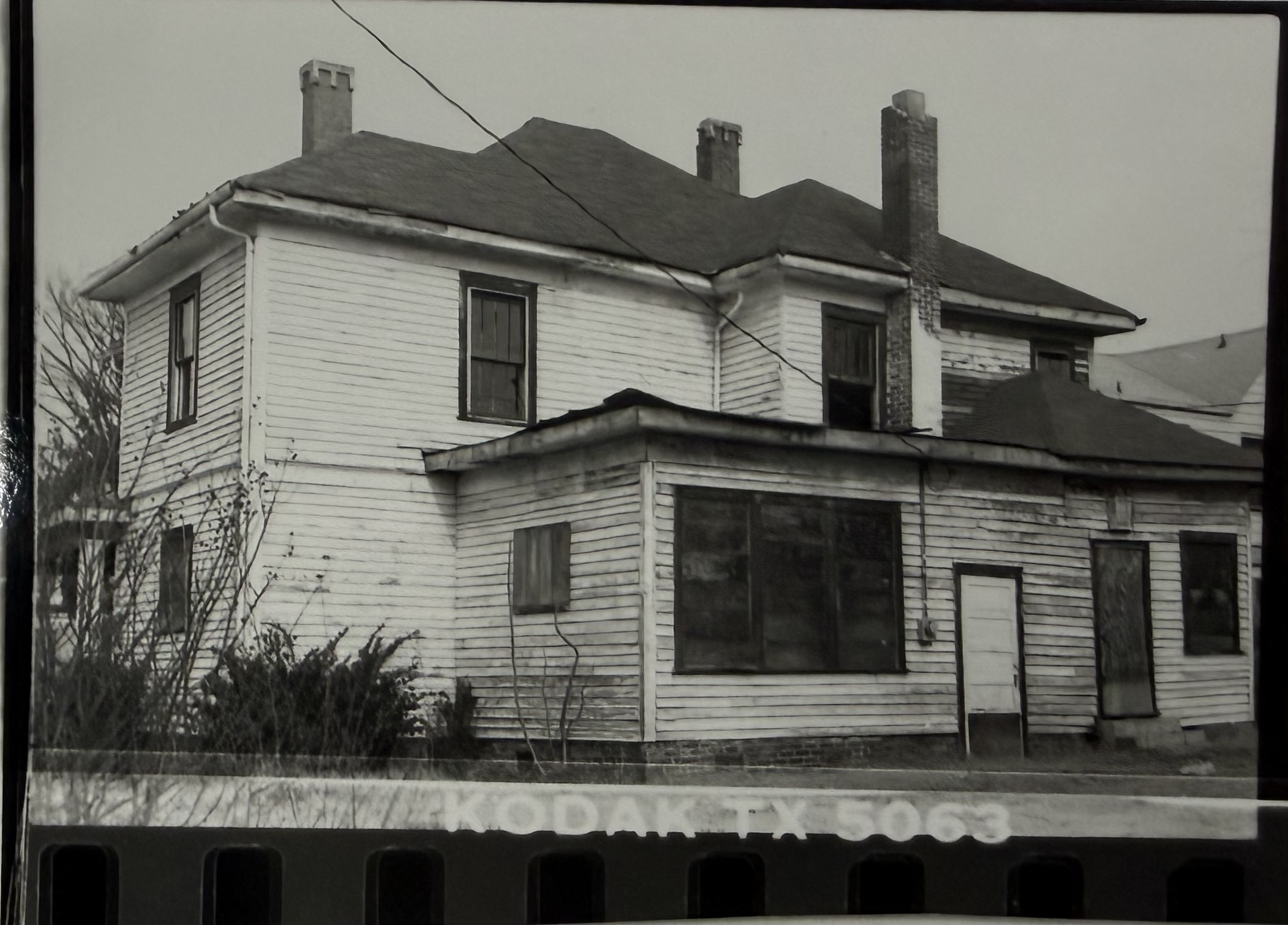
605 East Green Street.

The two hundred-third in a series of posts highlighting buildings in East Wilson Historic District, a national historic district located in Wilson, North Carolina. As originally approved, the district encompasses 858 contributing buildings and two contributing structures in a historically African-American section of Wilson. (A significant number have since been lost.) The district was developed between about 1890 to 1940 and includes notable examples of Queen Anne, Bungalow/American Craftsman, and Shotgun-style architecture. It was listed on the National Register of Historic Places in 1988.

As described in the nomination form for the East Wilson Historic District: “ca. 1908; 1 story; William Hargrove house; triple-A house with bracketed, chamfered porch posts and cut-out balustrade; asphalt shingled; Hargrove was a blacksmith.”

Originally numbered 606, the Hargrove house is second only to the Samuel H. and Annie M. Vick house in longevity on the block.

In the 1908 Hill’s Wilson, N.C., city directory: Hargrove Wm blksmith 206 S Goldsboro h 606 E Green

In the 1910 census of Wilson, Wilson County: at 606 Green, blacksmith William Hargrove, 43; wife Louvenia, 40; daughters Bessie, 17, and Willie L., 13; and boarder John Howard, 18.

In the 1912 Hill’s Wilson, N.C., city directory: Hargrove Wm blksmith h 606 E Green

In the 1920 census of Wilson, Wilson County: at 606 East Green, Luvenia Hargrove, 40, widow, and daughter Willie, 20, public school teacher.

In the 1930 census of Wilson, Wilson County: at 605 East Green, Luvenia Hargrove, 60, widow, and daughter Willie, 29, public school teacher.

In the 1940 census of Wilson, Wilson County: at 605 East Green, owned and valued at $1000, Louvenia Hargrove, 74, widow; son-in-law McDuffie Smith, 42, shoeshine parlor operator; and daughter Willie, 48, teacher.

In 1942, McDuffie Smith registered for the World War II draft in Wilson County. Per his registration card, he was born 12 July 1899 in Durham, N.C.; lived at 605 East Green; his contact was Luvenia Hargrove, 605 East Green; and he was self-employed.

In the 1950 census of Wilson, Wilson County: at 605 East Green, shoeshine parlor manager McDuffie Smith, 51; wife Willie H., 53, city grammar school teacher; and mother-in-law Luvenia Hargrove, 80, widow.

Luevenia Hargrove died 22 February 1958 in Wilson at her home at 605 East Green. Per her death certificate, she was born 27 February 1869 in Edgecombe County to Joshua Bulluck and Harriet Hines and was buried in Bulluck cemetery, Edgecombe County. Informant was Mrs. Willie Smith, 605 East Green.

McDuffie Smith of 605 East Green died 17 July 1971. Willie Hargrove Smith died 12 years later. Her nephew, William Hines Macklin, remained at 605 East Green.

Wilson Daily Times, 4 May 1983.

William H. Macklin died 13 March 1991 in Wilson.

On 7 November 1994, the Wilson Daily Times published a list of boarded-up houses that included 605 East Green, described as needing “minor repairs.”

The house was renovated and remains occupied today.

N.87-12-354-359, William Hargrove House, 605 E. Green Street, East Wilson Historic District, Wilson, Wilson County, Survey and National Register Branch, State Historic Preservation Office.

Call Gabe Bowden for a city hack.

The Daily News (Wilson, N.C.), 20 September 1900.

——

In the 1870 census of Lower Conetoe township, Edgecombe County, N.C.:  Gaib Bowden, 23, Daniel Wiggins, 25, Albert Lovett, 19, Orphan Knight, 23, and Richard Suggs, 19, farm laborers.

On 18 April 1875, Gabriel Bowden, 26, married Anne Ruff, 24, in Wilson.

In the 1880 census of Wilson, Wilson County: Sarah Jackson, 21; brother-in-law Gabriel Bowden, 40, brother-in-law, laborer; sister Anna, 32, cook; nephews Columbus, 11, house servant, and James, 9; son B.F. Jackson, 6; mother Vinus Ruff, 52; and boarder Whitehurst Wiswould, 64, laborer.

Gabel Bowden died 17 January 1911 in Wilson. Per his death certificate, he was 71 years old; was born in Edgecombe County; was a widower; lived at 410 Green Street; worked as a common laborer; and was buried in Wilson [probably, Oakdale Cemetery.]

“They’re all working that way down there.”

Screen Shot 2018-09-25 at 9.21.11 PM.png

Screen Shot 2018-09-25 at 9.21.30 PM.png

Screen Shot 2018-09-25 at 9.21.50 PM.png

Wilson Daily Times, 1 March 1939.

It took me a minute to figure the alleged fraud out.

Southern Tobacco Company required its stemmers to process 25 pounds of tobacco per day. If they struggled to make quota, the company told them to bring in someone to help. (Southern President James I. Miller denied knowing anything, of course. Southern was an affiliate of J.I. Miller Tobacco Company and shared its South Tarboro Street facility.) The “buddy” was not officially employed by Southern, but worked under the actual employee’s name and Social Security number and got a cut of the employee’s pay. Everybody did it, workers insisted. The problem came when the buddies filed for unemployment benefits, claiming they had earned no wages. Moses Hodge had not reported that Theodore Bell had given him half of his paycheck, and the hammer dropped.

Five people were charged and found guilty of defrauding the Unemployment Compensation Commission.

——

  • Mose Hodge — in the 1940 census of Wilson, Wilson County: at 315 Finch, owned and valued at $600, tobacco company stemmer Moses Hodge, 27; wife Macy, 20, tobacco company stemmer; children Loula, 7, and Connie Lee, 2; and mother Lula, 71. In 1940, Moses Jack Hodge registered for the World War II draft in Wilson County. Per his registration card, he was born 22 October 1912 in Durham, N.C.; his contact was wife Macy Thompson Hodge; he lived at 315 Finch Street; and he worked for Farmers Oil Company, Barnes Street.
  • William Henry Thomas — in 1940, William Henry Thomas registered for the World War II draft in Wilson County. Per his registration card, he was born 21 August 1918 in Wilson; lived at 524 South Lodge Street; his contact was wife Margaret Obery Thomas; and he worked for Export Tobacco Company.
  • Burley Ford — in the 1930 census of Black Creek township, Wilson County: farmer Burley Ford, 27, and wife Mary, 28.
  • Lela Hines — in the 1940 census of Wilson, Wilson County: at 208 South Vick, owned and valued at $1000, Raiford McPhail, 75, janitor at Fidelity building, widower; lodger Robert Sherdon, 50, carpenter; and lodger Lela Hines, 45, laundress at laundry.
  • Emma Crosland
  • Theodore Bell 
  • William “Tweet” Ellis
  • Cleo Barber — in the 1940 census of Wilson, Wilson County: at 6-8 Daniel, rented for $7/month, Sam Clarke, 32, electrician at “town department”; Cleo Barber, 29, lodger, tobacco factory hanger; and “lodger’s son” Maskar Barber, 13.

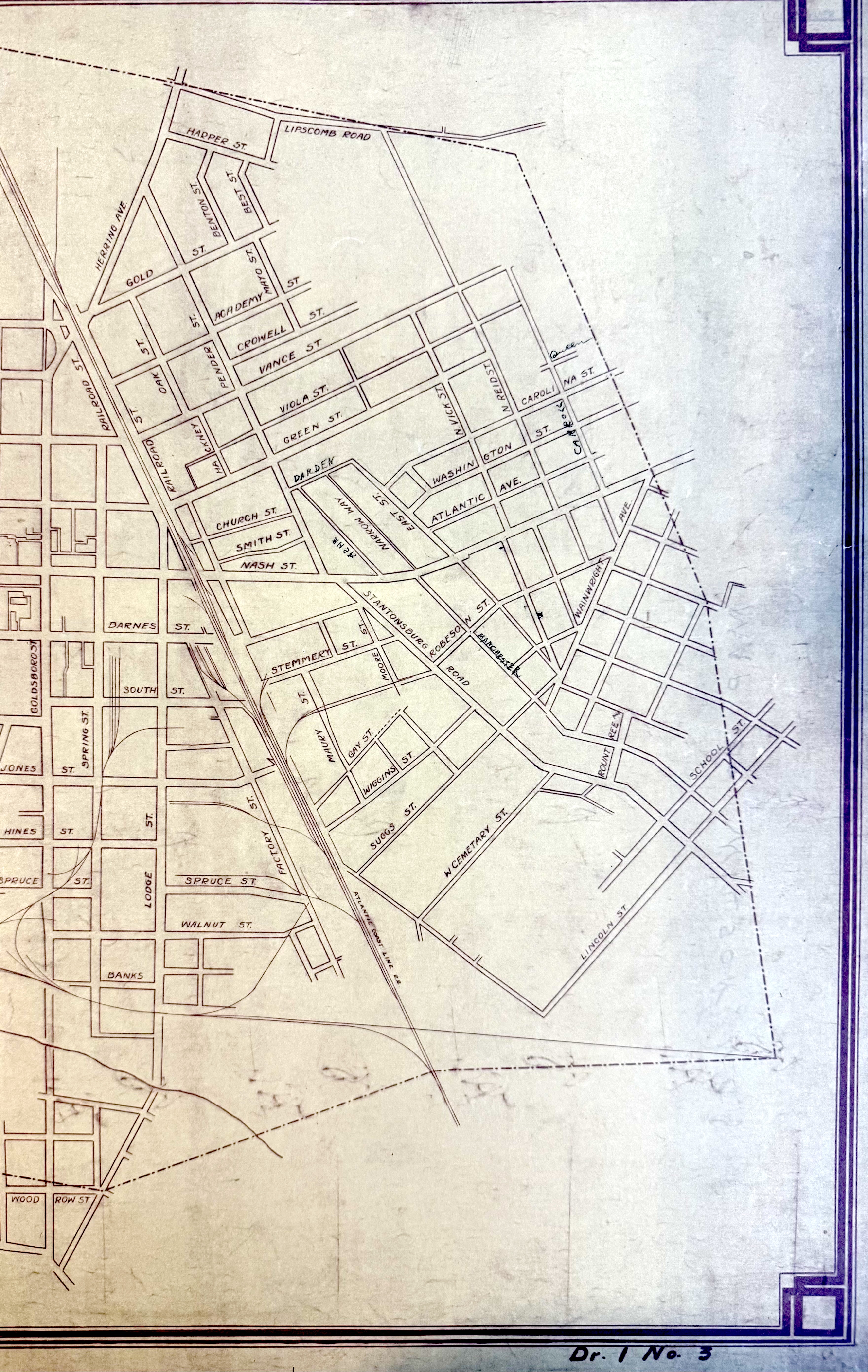
Map of the Town of Wilson, 1928.

Here’s a closer look at East Wilson. The streets north of Vance, except Lipscomb, were white residential, as were Railroad Street and Pettigrew Street (not labeled) south of Nash.

Town limits ran just behind Darden (then Wilson Colored) High School at roughly today’s Blakewood Street; south roughly along today’s Wainwright Street to Nash Street (at Freeman Round House Museum); then at a diagonal across Finch, Lane, New Bern Streets, etc.

Note School Street (named for the Colored Graded School), which became Elvie Street.

Just west of the railroad were a working-class white neighborhood centered along Factory Street (which no longer exists) and a working-class black neighborhood, Happy Hills, centered at Banks and Lodge.

Town of Wilson (1928), Maps, Wilson County Records, North Carolina State Archives.

Get to know your people; or, it’s reunion season.

Effenus Henderson (left) is an internationally known human resources and diversity thought leader. Wade J. Henderson (right) is, among other things, former president of the Leadership Conference on Civil and Human Rights. About 15 years ago, the two met at a National Urban League conference.

“You’re from North Carolina?,” asked Wade. “My father was from Wilson.”

“You need to talk to Lisa,” said Effenus.

Wade did. And in 2016, there we all were — in Dudley, North Carolina, birthplace of our grandparents, at the Henderson Family Reunion.

Wade’s grandfather Jesse “Jack” Henderson and my great-grandmother Bessie Lee Henderson were siblings. Jack came to Wilson around 1908, and my grandmother Hattie Henderson Ricks, Bessie’s orphaned daughter, arrived a few years later. Wade’s father Dempsey Lee Henderson was born in Wilson in 1927, and my father Rederick C. Henderson in 1934.

——

Is your Wilson County-based family having a reunion this summer? I’d love to feature it here — and add your reunion flyer or program to my collection!

Photo in collection of Lisa Y. Henderson, 2016.

600 East Green Street, re-re-revisited.

The J.D. and Eleanor Reid house has been in distress for decades, as shown in these photos taken for the East Wilson Historic District nomination process.

N.87-12-269-271, Judge D. Reid House, 600 E. Green Street, East Wilson Historic District, Wilson, Wilson County, Survey and National Register Branch, State Historic Preservation Office.

“Our loss is heaven’s gain”: a tribute to Sallie Barbour.

Wilson Daily Times, 29 April 1942.

——

  • Sallie Barbour
  • Nancy Wilkins
  • Magnolia Farmer — in the 1940 census of Wilson, Wilson County: at 207 East Street, Robert Farmer, 48, Farmers Cotton Oil laborer; wife Magnolia, 45; and daughter Marion Z., 16, washing and ironing..

The Vicks sell property downtown.

On 22 September 1913, Samuel H. and Annie M. Vick sold mail carrier Albert S. Barnes and blacksmith Hilliard T. Thomas a lot on the south side of Tarboro Street adjoining the property of Wilson Oil Mill and W.J. Davis Machinery Company. Vick had purchased the 40 foot by 150 foot lot from Silas Lucas and wife.

W.J. Davis Machinery, formerly Davis & Winstead, was on the south side of South Tarboro, at the Kenan Street end of the block. (Wilson Oil Mill owned a lot there, but their facility was on Grace Street at Stemmery Street.) The Vicks were among a very few African Americans who invested in real estate in early twentieth-century Wilson’s industrial blocks.

Deed book 97, page 235, Wilson County Register of Deeds Office, Wilson.

Report on the condition of schools.

Among other things, a committee formed to inspect county property reported on the condition of schools. Most were found to be in good condition, but, unsurprisingly, schools serving black students had more serious deficits.

The most common problems were lack of heat shields under heaters, broken window panes, leaky roofs, crumbling pillars, and “bad” toilets. Saratoga School was in good condition, and Penders was very good. On the other hand, Wilson High School was crowded and, at Lover’s Lane, the “building [was] about to fall down” and had “no water, no toilet.”

Wilson Daily Times, 11 February 1933.

The article went on to report the condition of the school system’s 41 buses, which delivered students to and from ten schools across the county — all serving white students. Black children walked to school in rain, snow, and blazing heat — often to the jeers and curses of their counterparts riding past.