artificial intelligence

Samuel H. Vick, as imagined.

I am ambivalent about using artificial intelligence to restore photographs. Or, more specifically, I’m concerned about manipulated photographs supplanting original images and further blurring the line between reality and misinformation. However, the allure of AI-enhanced images is strong, as I often contend with blurry, poorly lit photographs in unnatural sepia or black-and-white tones. Photographs whose condition sometimes exacerbates the distance between us and our ancestors.

I have been experimenting with ChatGPT lately, feeding it queries and images to be restored and colorized. The results are somewhat haphazard, with many images weird and off-putting. Other times, the images are breathtakingly sharp and … alive. Black Wide-Awake exists to resurrect forgotten lives, and I believe these images are valuable to help us connect with the men and women we read about in these posts. From time to time, I’ll share the better ones here, clearly marked as AI-generated.

——

Samuel H. Vick (1861-1947), Renaissance man.

John and Ida Clark, as imagined.

I am ambivalent about using artificial intelligence to restore photographs. Or, more specifically, I’m concerned about manipulated photographs supplanting original images and further blurring the line between reality and misinformation. However, the allure of AI-enhanced images is strong, as I often contend with blurry, poorly lit photographs in unnatural sepia or black-and-white tones. Photographs whose condition sometimes exacerbates the distance between us and our ancestors.

I have been experimenting with ChatGPT lately, feeding it queries and images to be restored and colorized. The results are somewhat haphazard, with many images weird and off-putting. Other times, the images are breathtakingly sharp and … alive. Black Wide-Awake exists to resurrect forgotten lives, and I believe these images are valuable to help us connect with the men and women we read about in these posts. From time to time, I’ll share the better ones here, clearly marked as AI-generated.

——

John H. Clark (1863-1949), mail carrier and Episcopal lay leader, and Ida R. Crenshaw Clark (1863-1942), teacher.

Libby McDonald McPhatter, as imagined.

I am ambivalent about using artificial intelligence to restore photographs. Or, more specifically, I’m concerned about manipulated photographs supplanting original images and further blurring the line between reality and misinformation. However, the allure of AI-enhanced images is strong, as I often contend with blurry, poorly lit photographs in unnatural sepia or black-and-white tones. Photographs whose condition sometimes exacerbates the distance between us and our ancestors.

I have been experimenting with ChatGPT lately, feeding it queries and images to be restored and colorized. The results are somewhat haphazard, with many images weird and off-putting. Other times, the images are breathtakingly sharp and … alive. Black Wide-Awake exists to resurrect forgotten lives, and I believe these images are valuable to help us connect with the men and women we read about in these posts. From time to time, I’ll share the better ones here, clearly marked as AI-generated.

——

Libby McDonald McPhatter (1905-1981), restaurateuse and hotel owner.

Nina Hardy Faison, as imagined.

I am ambivalent about using artificial intelligence to restore photographs. Or, more specifically, I’m concerned about manipulated photographs supplanting original images and further blurring the line between reality and misinformation. However, the allure of AI-enhanced images is strong, as I often contend with blurry, poorly lit photographs in unnatural sepia or black-and-white tones. Photographs whose condition sometimes exacerbates the distance between us and our ancestors.

I have been experimenting with ChatGPT lately, feeding it queries and images to be restored and colorized. The results are somewhat haphazard, with many images weird and off-putting. Other times, the images are breathtakingly sharp and … alive. Black Wide-Awake exists to resurrect forgotten lives, and I believe these images are valuable to help us connect with the men and women we read about in these posts. From time to time, I’ll share the better ones here, clearly marked as AI-generated.

——

Nina Frances Faison Kornegay Hardy (1882-1969), cook and nursemaid.


Henry Barnes, as imagined.

I am ambivalent about using artificial intelligence to restore photographs. Or, more specifically, I’m concerned about manipulated photographs supplanting original images and further blurring the line between reality and misinformation. However, the allure of AI-enhanced images is strong, as I often contend with blurry, poorly lit photographs in unnatural sepia or black-and-white tones. Photographs whose condition sometimes exacerbates the distance between us and our ancestors.

I have been experimenting with ChatGPT lately, feeding it queries and images to be restored and colorized. The results are somewhat haphazard, with many images weird and off-putting. Other times, the images are breathtakingly sharp and … alive. Black Wide-Awake exists to resurrect forgotten lives, and I believe these images are valuable to help us connect with the men and women we read about in these posts. From time to time, I’ll share the better ones here, clearly marked as AI-generated.

——

Henry Barnes (1884-1947), farmer.

Isaiah P. Thorne, as imagined.

I am ambivalent about using artificial intelligence to restore photographs. Or, more specifically, I’m concerned about manipulated photographs supplanting original images and further blurring the line between reality and misinformation. However, the allure of AI-enhanced images is strong, as I often contend with blurry, poorly lit photographs in unnatural sepia or black-and-white tones. Photographs whose condition sometimes exacerbates the distance between us and our ancestors.

I have been experimenting with ChatGPT lately, feeding it queries and images to be restored and colorized. The results are somewhat haphazard, with many images weird and off-putting. Other times, the images are breathtakingly sharp and … alive. Black Wide-Awake exists to resurrect forgotten lives, and I believe these images are valuable to help us connect with the men and women we read about in these posts. From time to time, I’ll share the better ones here, clearly marked as AI-generated.

——

Isaiah Prophet Thorne (1885-??), vaudeville artist, musician.

Lawrence and Mary Pender Hagans, as imagined.

I am ambivalent about using artificial intelligence to restore photographs. Or, more specifically, I’m concerned about manipulated photographs supplanting original images and further blurring the line between reality and misinformation. However, the allure of AI-enhanced images is strong, as I often contend with blurry, poorly lit photographs in unnatural sepia or black-and-white tones. Photographs whose condition sometimes exacerbates the distance between us and our ancestors.

I have been experimenting with ChatGPT lately, feeding it queries and images to be restored and colorized. The results are somewhat haphazard, with many images weird and off-putting. Other times, the images are breathtakingly sharp and … alive. Black Wide-Awake exists to resurrect forgotten lives, and I believe these images are valuable to help us connect with the men and women we read about in these posts. From time to time, I’ll share the better ones here, clearly marked as AI-generated.

——

Lawrence and Mary Gray Pender Hagans.

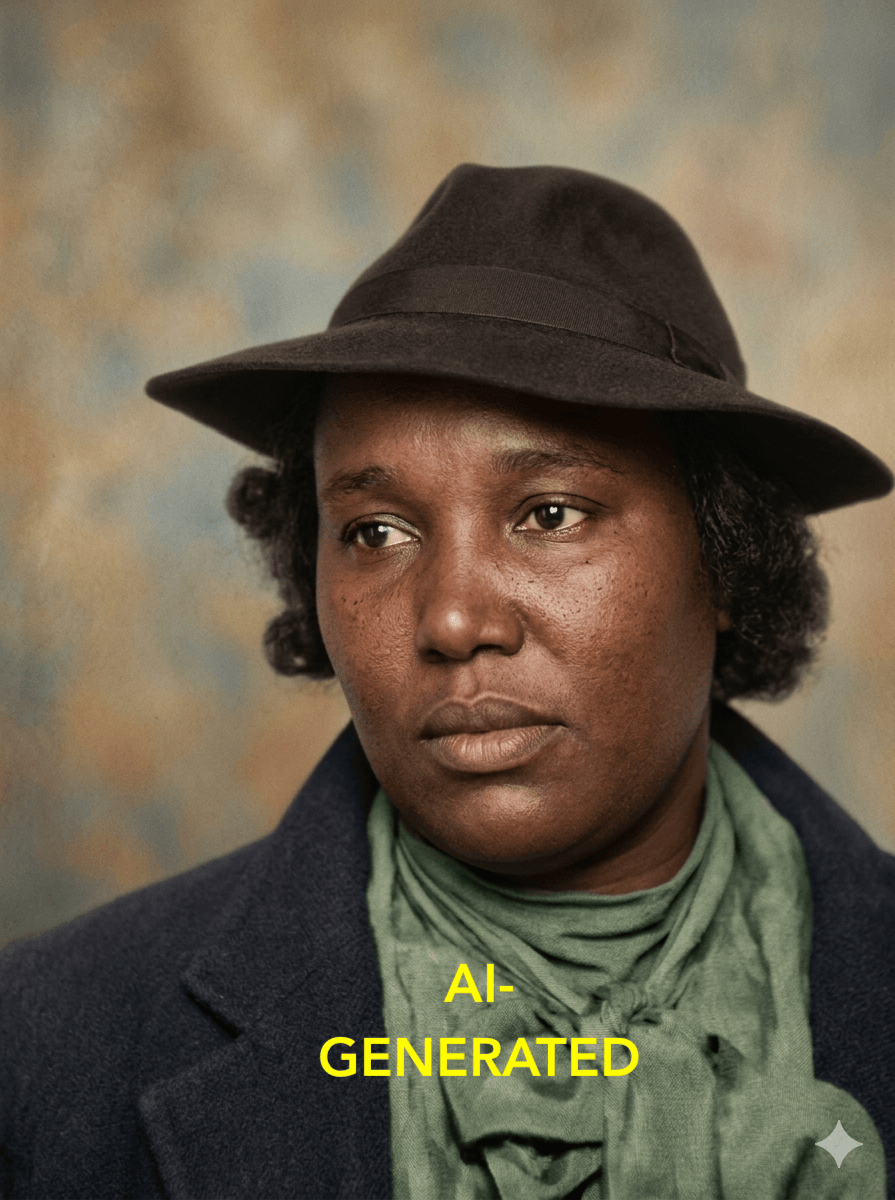
Maggie Foster Barnes, as imagined.

I am ambivalent about using artificial intelligence to restore photographs. Or, more specifically, I’m concerned about manipulated photographs supplanting original images and further blurring the line between reality and misinformation. However, the allure of AI-enhanced images is strong, as I often contend with blurry, poorly lit photographs in unnatural sepia or black-and-white tones. Photographs whose condition sometimes exacerbates the distance between us and our ancestors.

I have been experimenting with ChatGPT lately, feeding it queries and images to be restored and colorized. The results are somewhat haphazard, with many images weird and off-putting. Other times, the images are breathtakingly sharp and … alive. Black Wide-Awake exists to resurrect forgotten lives, and I believe these images are valuable to help us connect with the men and women we read about in these posts. From time to time, I’ll share the better ones here, clearly marked as AI-generated.

——

Maggie Foster Barnes.

A surprise encounter with A.I. slop.

Fairly regularly, I receive emails from readers asking about a family I’ve blogged about or someone they’re researching. For the most part, I’m not able to undertake in-depth unpaid research, but I’m always happy to take quick looks, make suggestions, and offer encouragement.

Yesterday I received such an email. The writer was asking about a person who lived from 1820 to 1905, perhaps in Wilson County. She provided the man’s mother’s name and even the names of his grandparents. I was surprised that she had identified ancestors dating back to the late 1700s, given that she was asking if this man were enslaved or free, about the availability of “plantation records,” and did not seem sure where he lived. We had a brief back and forth in which she disclosed that her information came from Ancestry.com, and I cautioned her about relying on bad, unsourced data. I also noted that there was a white man with the same name living around the same time in Greene County, and facts of his life may have been erroneously attributed to her ancestor, who was likely enslaved.

She then sent this. (I’ve done her the courtesy of redacting identifying information.)

I read it two or three times in puzzlement. Was she forwarding an earlier response I’d sent her, like months ago, but had forgotten?

No. A search of my Gmail account confirmed that I’d never corresponded with her before yesterday.

I read it again. I have a distinctive writing style, and this ain’t it.

This is AI-generated.

Based on our brief email exchange, M. created a letter written as if I had responded to her. And then she sent it to me. I emailed her to ask, essentially, “WTF?” No response. And I blocked her.

Black Wide-Awake exists to connect folks with their families. I’m always thrilled when my posts find their people, and I’ve experienced innumerable beautiful moments of discovery and collaboration with the Wilson County diaspora. This exchange, however, was weird and unpleasant. I sat on publishing this post long enough for my anger to fade, but I’m sharing as a caution about the fakery that can swirl about in genealogy spaces.

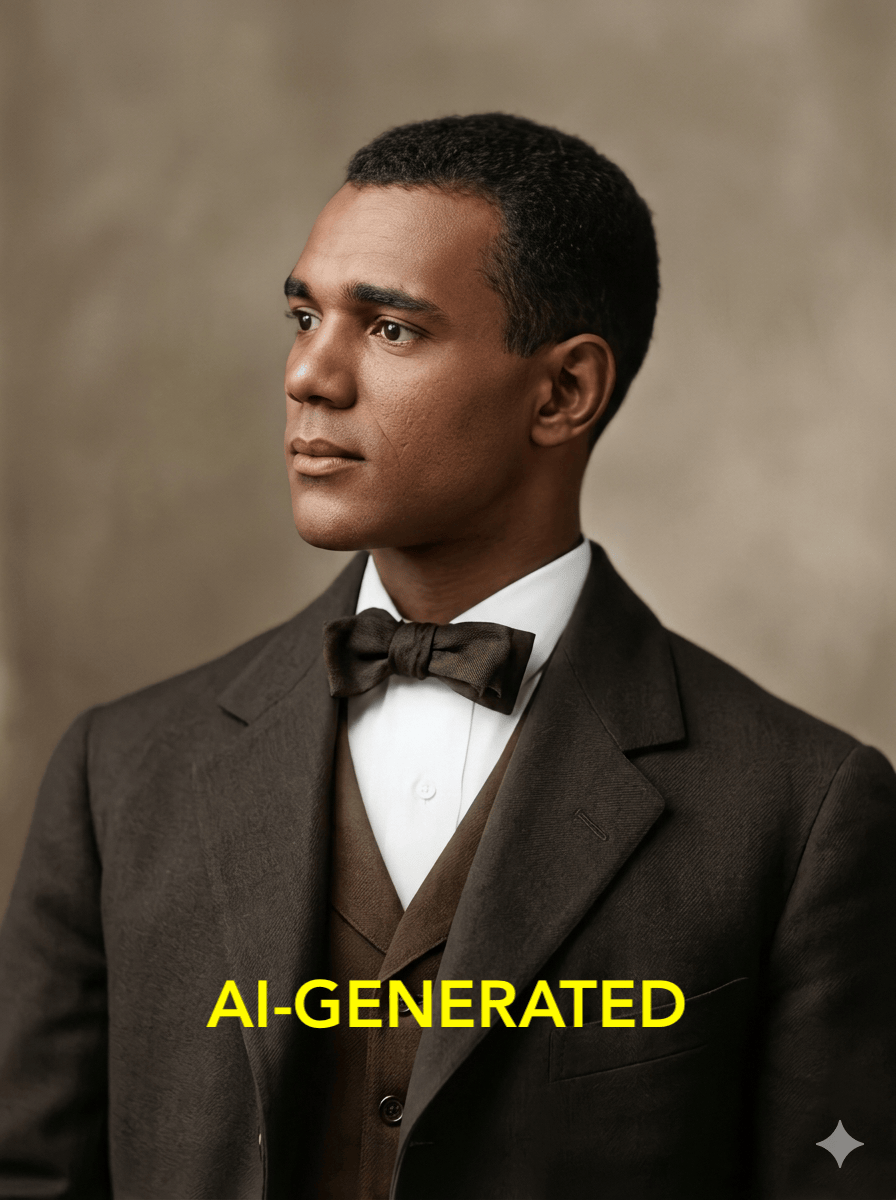
Biscoe Hagans, as imagined.

I am ambivalent about using artificial intelligence to restore photographs. Or, more specifically, I’m concerned about manipulated photographs supplanting original images and further blurring the line between reality and misinformation. However, the allure of AI-enhanced images is strong, as I often contend with blurry, poorly lit photographs in unnatural sepia or black-and-white tones. Photographs whose condition sometimes exacerbates the distance between us and our ancestors.

I have been experimenting with ChatGPT lately, feeding it queries and images to be restored and colorized. The results are somewhat haphazard, with many images weird and off-putting. Other times, the images are breathtakingly sharp and … alive. Black Wide-Awake exists to resurrect forgotten lives, and I believe these images are valuable to help us connect with the men and women we read about in these posts. From time to time, I’ll share the better ones here, clearly marked as AI-generated. Let me know what you think about them.

——

Biscoe Hagans (1866-1943), farmer.