convent

The Oblate Sisters at home.

In 1945, the Reid family sold 600 East Green Street to the Redemptorist Fathers of North Carolina, who converted it into a school and a convent for the Oblate Sisters of Providence. (Saint Alphonsus Catholic School moved to Carroll Street circa 1948.)

The 1950 census of Wilson, Wilson County, lists sisters Mary Juliana, Mary Antoinette, Mary Miriam, Mary Antonio, and Mary Cornelia in the house. Sister Mary Juliana was head of the convent. Three sisters were described as Catholic school elementary teachers, and one as a kindergarten teacher. The fifth, Sister Mary Antoinette, a native of Martinique and the eldest by twenty-plus years, did not work. (At least in the way defined by census takers.)

Wilson Daily Times, 9 September 1948.
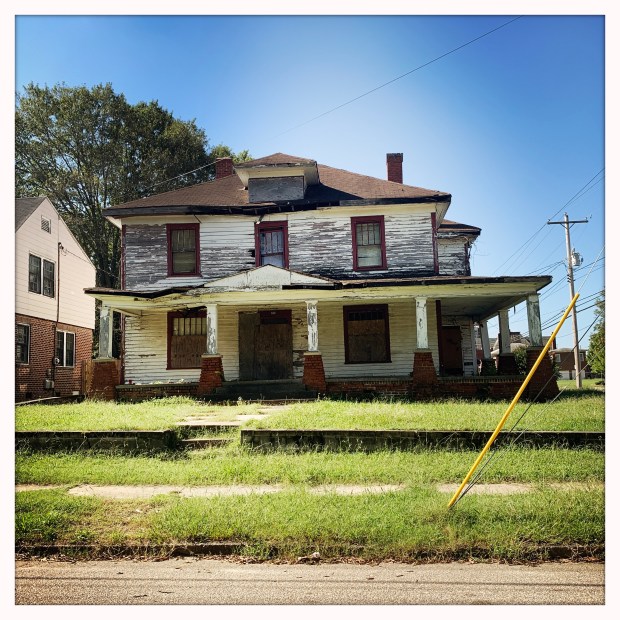
600 East Green Street, revisited.

This two-story house at the heart of East Wilson Historic District likely is not long for this world.

As detailed here, J.D. and Eleanor Frederick Reid built this two-story dwelling at 600 East Green about 1922, the year after the Commercial Bank, for which Reid was vice-president and principal promoter, opened. 

In 1945, the Reids sold the house to the Redemptorist Fathers of North Carolina, who converted it into a convent for the Oblate Sisters of Providence, the African-American order whose nuns taught at Saint Alphonsus Catholic School (which operated from the house for its first few years.)

The Redemptorist Fathers held the house until 1969, then they sold it to private owners, and it began its steep slide. The city of Wilson condemned 600 East Green in 1977, but took no further action against it. In 1990, the city repealed the condemnation order to allow a new owner to rehabilitate it. This Daily Times article described plans for its renovation, and Roderick Taylor Jr. described a little of its history.

Wilson Daily Times, 26 December 1990.

In 1994, Oxford House, a living facility for recovering addicts, took over in the space. I have not been able to determine how long it remained open. It is clear, though, that the Reid house/nunnery has been vacant and moldering for much of this century. Since I photographed it in 2016, it has lost the midsection of fascia and soffit above the upper floor and the front porch ceiling has begun to collapse.