On August 11, I emailed the four council members who attended the reconsecration last week and asked them to move for:
(1) formal engagement by the City with Lane Street Project and other representatives of the Vick Cemetery descendant community;
(2) an independent investigation into the removal and disposal of Vick Cemetery’s headstones circa 1995;
(3) preparation of a full survey map of Vick Cemetery, to include all built features; and
(4) a ground-penetrating radar survey of the areas not surveyed in 2022, including, but not limited to, the public right-of-way between the power poles and the street.
(None of the four council members have acknowledged receipt, but they generally don’t, so I’m going to assume they got my missive.)
I also encouraged council members to hold off on making decisions about Vick’s future without additional information about the history and current condition of the site and without the input of stakeholders whose family members are buried there. This means NO FENCE. It also means leave the parking lot alone for the time being. It is not lost on us that closing off the parking lot will make accessing all three cemeteries more difficult. And, as I noted before, the City doesn’t own any property “across the street,” so a new parking lot will not be built in the foreseeable future. Further, far more worrisome than the 18 graves lying under the lot are the unknown numbers at perpetual risk from the power poles.
When it tendered its GPR report, New South Associates offered to meet with Council to discuss its findings. The City did not accept this offer originally, but should do so before taking another step. (To borrow from Proverbs, lean not upon your own understanding, Council. The experts have offered to answer your questions.) The City should also consult with the North Carolina Office of State Archaeology, especially concerning the options for handling the bodies lying in graves under the power lines and/or in the public right of way. Additionally, the City could benefit from reaching out to counterparts in cities like Rocky Mount and Statesville, who have confronted similar issues.
On Thursday, August 17, Council will hold an Agenda Work Session at 5:45 P.M. followed by a regular Meeting at 7:00 P.M. Please attend the 7:00 meeting. Take notes. Speak out. We must continue to show council that we are committed to a better Vick Cemetery, and we demand transparency and accountability in all aspects of planning for the future of this sacred space.
I’ve spoken of the database I am developing of likely burials in Vick, Odd Fellows, and Rountree Cemeteries. My spreadsheet draws upon death certificates, obituaries, and other sources — most distressingly imprecise. The term “Rountree Cemetery” on these documents may refer to Vick, Odd Fellows, or Rountree. Some documents broadly refer only to burial in Wilson. However, in the absence of official burial records for any of the cemeteries, we make do.
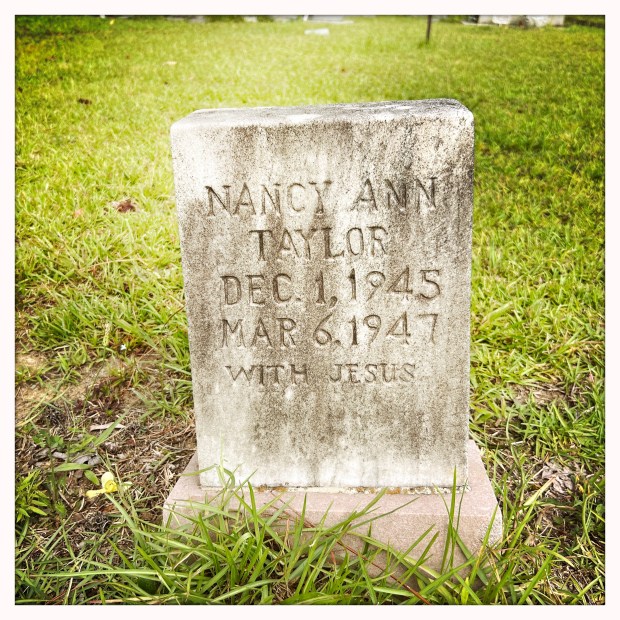
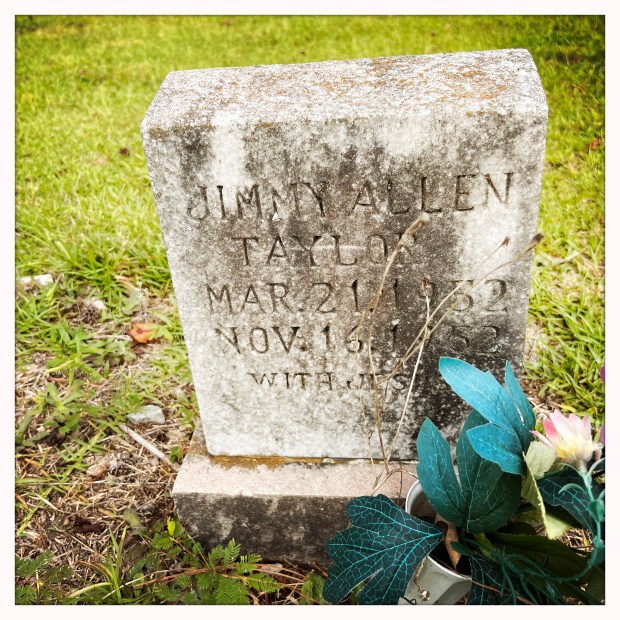
This series honors the men, women, and children who never had grave markers, or whose stones have been lost or stolen or destroyed. Graves believed to be in Vick Cemetery, which the City of Wilson stripped of remaining markers in 1996, will be identified with a Vick Cemetery logo.
Dr. Judy Wellington Rashid contributed personal details of the lives of two family members believed buried in Vick Cemetery (and a family chart!) I invite you to do the same.
——
Catherine Frison McPhail Clark was born 20 February 1871 in Charleston, South Carolina, to David Frison, born about 1840, and Easter Frison, born about 1850. She was married first to Sam McPhail and then to Samuel Clark. She and Sam McPhail had two daughters, one of which was Lottie McPhail Green Cohen. Lottie McPhail married first Henry Green; their children included Cora Ruth Green Wellington Dawson. Dr. Judy Wellington Rashid is among the children of Cora Wellington Dawson.
Cora Wellington Dawson reports that Catherine and Sam Clark owned a horse and a carriage while living on Smith Street in Wilson and attended the Methodist Church on Pender Street. Reportedly, Catherine Clark was a “lady of stature in the community.” As a widow, she lived at 401 Grace Street with daughter Lottie and her four children, including Cora.
Catherine Frison Clark died 9 November 1944 at Mercy Hospital in Wilson. Per her death certificate, she was born 20 February 1875 in Charleston, South Carolina, to David Frison and Easter [last name unknown]; she was a widow; and she lived at 401 Grace Street. She was buried in Rountree cemetery, and Lottie Cohen, 401 Grace, was informant. Clark was neither a member of Rountree Missionary Baptist Church nor an Odd Fellows family, so “Rountree” likely means she was buried in Vick Cemetery.
Mary Joyce Wellington was born in 1949 and died a few hours later. Her father Levi Wellington went with the funeral home directors “to take her to Rountree Cemetery after she was wrapped in a blanket.” Cora Ruth Wellington remained at home since she had just delivered. Records show that she is buried in Rountree Cemetery (more likely than not she was buried in Vick’s Cemetery; she was not a member of Rountree Baptist Church) in Wilson, NC.
Chris Facey has captured so much of the beauty of Lane Street Project’s work that it’s only fitting that I wrap up the celebration with his photographs.
The esteemed clergy.
Rev. H. Maurice Barnes, Calvary and White Rock Presbyterian Churches.
Rev. Daniel Pinell, Saint Mark’s Episcopal Church and La Iglesia de la Guadalupana.
Google Maps offers a time-lapse street sview of the Lane Street Project cemeteries, capturing them in April 2008, June 2012, and March 2022. In the images below, we are moving along Bishop L.N. Forbes Street (known as Lane Street until 2021) toward the substation, looking out the driver’s side window.
The boundary between Rountree and Odd Fellows Cemeteries
At this vantage point, we are looking at the front edge of Odd Fellows, the ditch separating it from Rountree, and the western edge of Rountree.
The 2008 photos were taken in the midst of heavy rain and are dark and grainy. However, we clearly see the power pole jabbed into the surface of the cemetery at far left and in the distance, a small headstone. The knob at the top leads me to believe it’s Louvenia Pender‘s grave marker, which now lies toppled and broken, but quite legible. The “ditch” is too narrow to have admitted a dray or automobile, but perhaps was a cart path? It only extends a few dozen yards in from the street. In Odd Fellows, the Dawson and Tate plots are clearly visible, along with a low border at the very edge of the ditch fronting the street. The canopy at the rear is fairly low except for a clump of pines at the tree line in Rountree.
The 2012 images were made on a bright early summer day. Rountree is weedy, but relatively open. Pender’s headstone is no longer visible. The tree line is thick with woody undergrowth. The ditch between the cemeteries has started filling in with weedy trees and dog fennel. The border around the Tate plot is still visible. Irma Vick‘s headstone leans back at the edge of the woods, and Walter and Nettie Foster‘s markers appear at top right.
Google’s cameras passed again near the end of Lane Street Project Season 2. The daylight visible through the tree line reflects our work pulling down vines and felling dead trees. The side ditch has filled up with weedy saplings; the base of the power pole is barely visible in the upper left corner. The Tate border has fallen into the street ditch.
Odd Fellows Cemetery
Odd Fellows was looking pretty forlorn in 2008. The metal gate posts standing on either side of a former entrance to the cemetery are visible. Rountree, which is now pretty much a jungle at the ditch’s edge, is relatively restrained here.
In 2012, the tree line of both cemeteries is solid. The street ditch is a mess.
In 2022, the ditch is clear (at LSP’s insistence), and the thinning of undergrowth and removal of wisteria from treetops in Odd Fellows is plainly visible. One of the gateposts is gone. (I believe it was knocked down during debris removal in a Season 1 clean-up.)
Odd Fellows at the parking lot
A mislabeled pillar erected by the City of Wilson in the late 1990s stands just inside the Odd Fellows line near the Vick Cemetery parking lot. There is no such place as Rountree-Vick Cemetery. Rather, there are three contiguous, separately owned cemeteries — Rountree, Odd Fellows, and Vick — established between 1897 and 1913. Vick is a public cemetery; the others, private.
In 2012, what appears to be a television lies on its face in Odd Fellows. It has been a favored dump site since at least the 1950s. A heap of sand visible just behind the Rountree-Vick pillar was probably used to level sunken graves in Odd Fellows or Vick.
Odd Fellows again showing off the results of LSP’s labors. The planter with pansies was a generous gift; it was stolen.
The northeast corner of Vick Cemetery
Other than tree growth and the state of the ditch, there’s not much difference in these views.
A view of the monument (or its copse, anyway)
The planting around the monument is a poorly considered mixture of cherry trees, hollies, and juniper. By 2008, it was already overgrown.
When LSP began cleanups in 2020, one of the cherries was dying, the junipers were scraggly, and the hollies were a hulking wall of foliage, creating a dark cavern around the obelisk. As seen below, LSP volunteers limbed up the hollies and cut several junipers down to the ground to let in some air and light.
In the spring of 2023, the Cemetery Commission removed the dying cherries and all the junipers and shaped up the hollies to noticeable effect.
Milton Simms and Willie Jones bumped into one another on an East Wilson sidewalk near Tom Johnson‘s filling station. A petty argument broke out, and Jones hurled a brick at Simms. Struck in his midsection, Simms died within minutes, and Jones fled the scene.
Jones was captured a day later, charged with manslaughter, convicted, and sent to Wilson County’s state highway prison camp. He escaped in July 1934, but was tracked down by bloodhounds within hours.
——
In the 1920 census of Wilson, Wilson County: on Manchester Street, Frances Simms, 39, and children Milton, 22, Eddie, 18, Raymond, 10, Maggie, 8, Ava, 5, Richard, 2, and Ray, 3 months.
In the 1928 Hill’s Wilson, N.C.: Simms Milton (c) brklayer h 106 Manchester
In the 1930 census of Wilson, Wilson County: at 106 Manchester, laundress Frances Simms, 37, widow, with Milton, 20, Eva, 7, and Neva Simms, 5. [Frances and Milton’s ages were considerably off in this census.]
Milton Simms died 29 August 1933 in Wilson. Per his death certificate, he was 32 years old; was born in Wilson County t0 Ed Mitchell of Wayne County, N.C., and Frances Sims of Wilson County; worked as a common laborer for Imperial Tobacco Company; and died of being “hit in the stomach with brick by Willie Jones Died instantly Homicide.” Raymond Sims was informant, and he was buried in Wilson. [He was almost certainly buried in Vick Cemetery.]
Like other white Primitive Baptist congregations, Saratoga’s White Oak Primitive Baptist admitted African-Americans to segregated membership — probably from the time it was founded in 1830. However, when they were able to form their own congregations after Emancipation, most Black Primitive Baptists left white churches to worship in less discordant settings, and White Oak’s members joined African-American churches in southeast Wilson County, including Bartee and Cornerline.
White Oak P.B. is no longer active. A small cemetery lies adjacent to the church, but its graves are relatively recent. (The oldest marked grave dates to 1927.) It seems likely that prior to that time, church members were buried in family cemeteries in the neighboring community.
White Oak Primitive Baptist Church, Saratoga, Wilson County.
On a recent visit to White Oak, I was surprised to recognize a feature in the graveyard. Up to then, of hundreds I’ve found, I had never seen a Clarence Best-carved marker on a white person’s grave. Here, though, was a little cluster, a single family whose small marble headstones I immediately recognized as Best’s work. They tell a terrible tale of loss, four babies who died before they reached the age of two.
Did you know Wilson was the site of a Confederate hospital?
Its remnants stand at the corner of Lee and Goldsboro Streets.
In 1954, North Carolina Department of Cultural Resources’ North Carolina Highway Historical Marker Program installed a marker near the original site of the hospital, and the agency’s website features the startling essay below.
“The Confederacy organized its Medical Department late in 1861 and within months, in April of 1862, the North Carolina General Military Hospital No. 2 was established in Wilson in what had once been the Wilson Female Seminary. Dr. Solomon Sampson Satchwell, who had graduated from Wake Forest College and studied medicine at New York University before serving as a military surgeon with the Twenty-fifth North Carolina Infantry, was appointed Surgeon-in-Charge. In the 1864 Confederate States Medical and Surgical Journal the Wilson hospital was listed as one of twenty-one principal hospitals in North Carolina. It served those wounded in fighting along the coast.
“The hospital made Wilson known outside of the state of North Carolina. Employing thirty-five to forty people, it also boosted the local economy. Most nurses and orderlies were unskilled soldiers; however, at least seven local women were known to have worked at the hospital as matrons. Their duties included food preparation and cleaning. The Atlantic Coast Line Railroad that ran through Wilson provided the military hospital with supplies, including ice and turpentine, used to treat fevers.
“Fighting never broke out in Wilson, but, on July 20, 1863, ‘an immense armament of negroes and Yankees’ advanced on Wilson. Reportedly, a group of invalids from the hospital and local militia defended Wilson by destroying the bridge over the Toisnot Swamp to halt the invaders. All of those who died at the hospital were buried in a mass grave. The hospital closed at the end of the war. When Wilson created a town cemetery, they were re-interred there with a Confederate monument erected over the site. Wilson Female Seminary reopened in the former hospital and received a charter as Wilson Collegiate Institute in 1872.”
The interpretive signboard in front of the building, erected by the North Carolina Civil War Trails program (and badly in need of a good wash), reads:
“This is the only known surviving portion of one of Wilson’s earliest school buildings, the Wilson Female Academy, which also served as a Confederate hospital during the war. Wilson’s location on the Wilmington & Weldon Railroad, the principal north-south line that was linked to Virginia in Weldon by the Petersburg Railroad, made the town a good site for a hospital after the war began. On April 1, 1862, Confederate authorities seized the building for use as a general military hospital.
“Dr. Solomon S. Satchwell, the surgeon in charge, turned the forty classrooms and other rooms into wards and treated hundreds of patients there. The frame, two-story building had a two-hundred-foot-long facade and a large one-story rear addition. It also had dozens of large windows, essential for summer ventilation.
“Soldiers who died there of wounds or disease were buried near the academy grounds. In 1894, they were reinterred under a burial mound in Maplewood Cemetery two blocks north of here. The Confederate monument on top of the mound was dedicated on May 10, 1902.
“Edmund G. Lind, a British architect who emigrated to New York in 1855 and subsequently practiced in Maryland, North Carolina, and Georgia, designed the Italianate-style school building. It was completed in 1859 about two blocks south of here. After the war, the former female academy and hospital served as Wilson Collegiate Institute from 1872 until it closed in 1898, when the building was separated into housing units. This section, part of the school’s rear addition, was moved here in 2005 and rehabilitated.”
——
Typically, the historical marker essay makes no mention of the men and women performing the hospital’s essential grunt work. Enslaved men and women toiled as nurses, cooks, and laundresses, and the reports Dr. Satchwell was required to file regularly reveal their names.
Daniel, Samuel, Benjamin, Edy, Annie, Sarah, William, Francis, Flora, Eli, Jerry, Matilda, Harmon, Hoyt, Martha, Dorcas, Laura, Mary, Oliver, Alvana, Alfred, George, America, Isabella, Harriet, Rachel, Henry, Joseph, General, Ansley, Tilda, Minerva, Delphia, Maria, Mahala, Nicey, Chaney, Esther, Eliza, Tom, and Charles cooked, cleaned, and cared for wounded Confederate soldiers over the next two years. Pomeroy P. Clark, a Connecticut-born buggy manufacturer who arrived in Wilson in 1851, had a near-monopoly over the provision of enslaved people to the hospital, supplying almost all of the men and women named above.
Muster Roll dated 1 April 1862 showing enslaved people, at bottom left, rented to the Confederate Hospital.
This is curious. P.P. Clark is listed in 1850 slave schedule of Nash County, North Carolina, as the owner of four enslaved people. In the 1860 census of Wilson, Wilson County, he is described as a lumber manufacturer with $2000 in personal property, but is not listed in the slave schedule. We know that in 1860 Clark bought four enslaved people from John P. Clark as trustee of Nancy B. Clark. The adult in this group of four, a woman named Peggy, is not named as a hospital laborer. Peggy had once belonged to Henry Flowers, whose daughter was Nancy B. Clark. Flowers’ estate also included enslaved women named America and Isabelle, and an enslaved man named Henry (known as Harry), who married a woman named Flora around 1859. These four match names of people put to work at the Confederate Hospital, but who were the others? If Clark (who himself worked at the hospital as steward were acting as a broker for other enslavers, would Dr. Satchwell have recorded the workers as “Negro slave hired of P.P. Clark”?
In addition to enslaved people, a few free people of color worked at Confederate Hospital No. 2. On 26 May 1864, Lemon Taborn and William Jones were hired to perform unspecified work at $11.00/month. Alexander Jones was hired five days later at the same rate and, on June 1, Mord. Hagans came aboard for $10/month. The Jones cousins appear in the 1860 census of Old Fields township, Wilson County, and Mordecai Hagans in the 1860 census of Nahunta township, Wayne County.
Muster Rolls, Hospital Department, Wilson, N.C., 1862-1864, War Department Collection of Confederate Records, National Archives and Records Administration; photos by Lisa Y. Henderson.