Please join me in celebrating the 60th wedding anniversary of my parents, Rederick C. and Beverly Allen Henderson.

20 May 1961, Newport News, Virginia, my mother’s hometown.
I have felt their love every single day of my life. What greater blessing?


Please join me in celebrating the 60th wedding anniversary of my parents, Rederick C. and Beverly Allen Henderson.
20 May 1961, Newport News, Virginia, my mother’s hometown.
I have felt their love every single day of my life. What greater blessing?

Carolina Theatre, perhaps circa its opening about 1930.
The Carolina (later Drake) Theatre was one of several theaters operating west of the tracks that either did not admit Black patrons or relegated them to the balcony until the mid-1960s. The balcony entrance is plainly visible at left.
Below, the old theatre in 2020.

Top photo courtesy of Steve Brown; original credit unknown. Bottom photo by Lisa Y. Henderson, September 2020.

Wilson Daily Times, 7 September 1948.
——

Viola Brown Best (1900-1963).

Oscar Best (1890-1976).
——
In the 1900 census of Falling Creek township, Lenoir County, N.C.: farmer John W. Best, 33; wife Nancey, 29; and children Florence, 10, Oscar, 9, and Lithey, 7.
In the 1910 census of Wilson, Wilson County: lumber mill laborer John W. Best, 43; wife Nannie, 43, laundress; and children Oscar, 19, lumber mill laborer, and Litha, 17, servant.
On 14 August 1910, Oscar Best, 21, of Cross Roads township, son of John W. and Nan Best, married Daisy Barnes, 20, of Cross Roads, daughter of Joe Barnes. Missionary Baptist minister William Baker performed the ceremony in the present of Will Bullock, James Coleman and [Rosa] Hinnant.
In the 1920 census of Gardners township, Wilson County: farmer Oscar Best, 29; wife Daisy, 25; and children Seretha, 9, Mildred, 8, Hattie, 6, James, 4, Virginia, 2, and Nannie, 2 months.
Daisy Best died 9 May 1922 in Wilson township, Wilson County. Per her death certificate, she was 32 years old; was born in Wilson County to Joseph Barnes and Lillie Strickland; was married to Oscar Best; and was a tenant farmer for Fred Washington. Informant was Nan Best.
On 29 December 1925, Oscar Best, 33, son of John W. and Nan Best, married Viola Brown, 23, daughter of Neal and Patsy Brown, in Wilson. A.M.E. Zion minister Wyatt Studiway performed the service in the presence of Samuel Austin, Lucius Studaway, and Nellie Thompson.
In the 1930 census of Wilson, Wilson County: on Harpers Road, farmer Oscar Best, 40; wife Viola, 28; and children Mildred, 17, Hattie, 14, Virginia, 12, James, 13, Andrew, 13, Mamie, 11, Jessie, 11, Oscar, 4, Corine, 3, and Joe Lizzie, 2.
In the 1940 census of Saratoga township, Wilson County: farmer Oscar Best, 50; wife Viola, 40; and children Buddie, 20, Oscar, 14, Corina, 12, Joe E., 12, Dollie Mae, 11, John, 10, J.D., 9, Herbert Lee, 4, Horace, 6, and William, 1.
In 1940, Buddy Best registered for the World War II draft in Wilson County. Per his registration card, he was born October 1919 in Laurinburg, N.C.; lived at Route 3, Wilson; his contact was father Oscar Best; and he worked for W. Herbert Ellis.
In 1943, Oscar Junior Best registered for the World War II draft in Wilson County. Per his registration card, he was born 15 August 1925 in Wilson County; lived at Route 3, Saratoga, Wilson County; and his contact and employer was Oscar Best.
Corine B. Woodard died 30 January 1953 at Mercy Hospital, Wilson. Per her death certificate, she was born 12 October 1928 in Wilson County to Oscar Best; was a laborer; was married; and lived at 1211 Wainwright Avenue. Informant was Walter Woodard.
James Best died 7 September 1958 in Wilson township, Wilson County. Per his death certificate, he was born 6 December 1919 in Wilson County to Oscar and Daisy Best; was married to Rosa Best; lived in Portsmouth, Virginia; and worked as a metalsmith helper.
Viola Best died 27 June 1963 in Wilson. Per her death certificate, she was born 14 May 1900 in Laurinburg, N.C. to Neal Brown and Patsy Pickett, was married to Oscar Best, and was a laborer.
Mildred Best Williams died 27 October 1967 in Wilson. Per her death certificate, she was born 3 February 1912 on Wilson County to Oscar Best and Nannie Best; lived at 206 South Reid Street; and was married to Alvester Williams.
Oscar Best died 25 July 1976 in Wilson. Per his death certificate, he was born 25 December 1887 to John Best and Nannie Sutton; was married; and worked as a farmer. J.D. Best was informant.
Hattie Best Jones died 19 May 1980 in Wilson. Per her death certificate, she was born 15 January 1915 in Nash County to Oscar Best and Dazie Best; was a widower; and loved at 1110 Queen Street.
Oscar Best Jr. died 6 August 1886 in Wilson. Per his death certificate, he was born 25 August 1925 to Oscar Best Sr. and Viola Brown; was married to Mildred Jones Best; and worked as a carpenter for a container corporation.
Buddy Best died 6 April 1991 in Goldsboro, N.C. Per his death certificate, he was born 17 October 1917 in Wilson to Oscar Best and Viola Brown.
Roland Best died 8 February 1993 in Wilson. Per his death certificate, he was born 30 March 1921 to Oscar Best and Viola Brown; was a widower; and worked as a heavy equipment operator.
Photos courtesy of Ancestry.com user Portia Black.
A fuller story of Alma Farmer‘s attempted suicide:


Wilson Daily Times, 16 November 1921.
I have not found a death certificate (or indeed anything at all) for Alma Farmer; she may have survived her terrible injuries.
One of the great benefits of blogging is the insight and information contributed by readers. In October 2019, I wrote of an 1866 custody dispute referred to the Freedmen’s Bureau by John B. Batts, former owner of a woman named Penny and her children. (The 1860 slave schedule of Gardners township, Wilson County, lists John B. Batts with seven slaves — a 55 year-old man; a 21 year-old woman; boys aged 9, 8, 7, and 6; and a 2 year-old girl.) The children’s father, Abram, was seeking to take them, and Batts and Penny contested his claim. Batts did not name the children in his petition, nor did he give surnames for Penny and Abram.
Isabelle Martin cracked the mystery on the basis of information provided in Nash County marriage license applications filed in the 1870s. Penny Hines was the mother, Abram Sharpe was the father, and the children were Alexander, Adline, Amanda, Gandy, Joshua, and Peter Batts (and maybe others.) That the children adopted J.B. Batts’ surname, rather than that of their mother or father suggests (but does not prove) that they remained with him well after slavery, and demonstrates the folly of making assumptions about relationships among freedmen on the basis of their last names.
Here’s what I now know about the family:
We’ve already met Abram Sharpe here. He was enslaved by Benjamin W. Sharpe and named in Sharpe’s will. Abram Sharpe, son of Church Bynum and Thana Sharp, married Caroline Hines, daughter of Allen Hines and Harriet Hines, on 12 January 1869 in Wilson County.
In the 1870 census of Joyners township, Wilson County: farm laborer Abram Sharp, 30, wife Caroline, 19, and son John, 9 months.
In the 1900 census of No. 13 Cokey township, Edgecombe County: farmer Abram Sharp, 64; wife Caroline, 62; children Willie, 15, Mamy, 14, and Richard, 8; grandchildren Fred, 7, Nathan, 4, and Liza, 2; and widowed mother-in-law Harriett Hines, 77. But also, in the 1900 census of No. 10 township, Edgecombe County: farmer Abrom Sharp, 55; wife Caline, 50; and children Mamie, 8, Willie, 7, and Hattie, 30.
In the 1880 census of Cooper township, Nash County: Penny Hines, 40, hireling. [On either side, son Red Batts and daughter Amanda Batts Hargrove. All appear to have been working for white farmer Wiilis Eason.]
On 31 December 1883, Alice Batts, 19, daughter of Penny Hines, married Daniel Parker, 21, at Redman Hines’ in Nash County. [Is this another of Abram and Penny’s children? Or just Penny’s?]
[Was Penny a Hines because she remarried? Was her next husband Redman (or Reddin) Hines, called “Red”? Red Hines hosted or witnessed the marriages of three of the Batts children. In the 1880 census of Stony Creek township, Wilson County: ditcher Reddin Hines, 40; wife Penny, 40; and children Alice Ann, 15, Margaret, 12, Jno., 7, Calford O., 6, Charles B., 4, and Joe and Ida, 1.]
On 20 December 1874, Alex Batts, 19, married Mariah Daniel, 24, at Red Hines’ house in Nash County.
In the 1880 census of Stony Creek township, Nash County: ox driver Alex’r Batts, 23; wife Mariah, 26; and children Bettie, 4, Jno. Rich’d, 1, and Mary, 3 months.
In the 1900 census of Rocky Mount township, Nash County: farmer Alex Batts, 46; wife Maria, 45; and children Johnnie, 22, Joseph, 14, Laurence, 12, Mancy, 11, Lula B., 9, Rosco, 8, and Roy, 4.
On 26 December 1871, Adline Batts, daughter of Abram Sharp and Penny Batts, married Jerry Davis, son of Doctor O. Bunn and Harriet Davis, at Red Hines’ in Nash County.
On 4 November 1875, Charles Hargroves, 35, of Nash County, married Amanda Batts, 18, of Nash County, daughter of Abram Sharpe and Penny Hines, in Cooper township, Nash County.
In the 1880 census of Cooper township, Nash County: next to Red Batts, 23, hireling, and Penny Hines, 40, hireling, hireling Charles Hardgrove, 46, and wife Amanda, 18, hireling.
In the 1900 census of Township No. 14 Upper Town Creek, Edgecombe County: farmer Charles Hargroves, 63; wife Amanda, 38; and children John C., 16, Mance H., 13, Maggie, 11, Cora, 10, Bessie, 8, Ether, 5, and Ella, 1.
Manda Lane died 10 June 1914 in Township #12, Edgecombe County. Per her death certificate, she was about 53 years old; was married; and was the daughter of Abram Sharp and Pennie Forehand. Mance Hargrove was informant.
Ether Bryan died 11 June 1916 in Rocky Mount, Edgecombe County. Per her death certificate, she was born August 1894 to Charles Hargrove and Amanda Hines; and was married. Flora Hargrove was informant.
Mance Hargrove died 5 May 1945 in Rocky Mount, Nash County. Per his death certificate, he was born 22 June 1886 in Nash County to Charles Hargrove and Manda Batts; was married to Florida Hargrove; lived in Rocky Mount, Edgecombe County; was a merchant in a grocery store; and was buried in Unity cemetery, Rocky Mount.
Lillie Williams died 26 December 1947 in Sharpsburg, Rocky Mount township, Edgecombe County. Per her death certificate, she was born 15 March 1907 in Nash County to Charles Hargrove and Mandy Lewis; was married to Mandonia Williams; and was buried in Unity cemetery, Rocky Mount.
On 23 May 1878, Gandy Batts, 24, of Nash County, son of Abram Sharp and Penny Hinds, married Emily Whitley, 18, daughter of John and Crensy Whitley, in Rocky Mount, Nash County. Red Hines was a witness.
In the 1880 census of Stony Creek township, Nash County: farm laborer Gandy Batts, 26; wife Emily, 21, and son Balaam, 1.
In the 1900 census of Toisnot township, Wilson County: farmer Gandy Batts, 48; wife Emma, 40; sons Bailey [Balaam], 21, and Allen, 15; and cousin Charley Hines, 24.
Gandy Batts is buried in Elm City Colored Cemetery. His broken headstone, made in the anchor-and-ivy style, states: Gandy Batts died Sept. 22, 1908 Age 53 Yrs. Gone to a brighter home Where grief can not [come.]
Ballam Batts died 25 March 1952 at his home at 1000 Roberson Street, Wilson. Per his death certificate, he was born 15 October 1886 to Gandy Batts and Emily Whitley; was married to Clara Batts; worked as a farmer; and was buried in Elm City [Colored] Cemetery.
On 10 May 1873, Joshua Batts, 20, of Nash County, son of Abram Sharp and Penny Hines, married Silvia Whitaker, 25, of Nash County, daughter of Gray Whitley, at John Joyner’s plantation in Coopers township, Nash County. Peter R. Batts applied for the license and was a witness.
In the 1880 census of Stony Creek township, Nash County: farmer Joshua Batts, 26, farm laborer; wife Sylvia, 28; and children William, 15, Fountain, 10, Ella, 6, Helen, 5, Ella, 2, and Mindy Ann, 1 week.
In the 1900 census of Morehouse Parish, Louisana: farmer Josh Batts, 54; wife Silvie, 52; and daughter Elvie, 15.
On 27 July 1878, Peter Reddick Batts, 22, of Nash County, son of Abram Sharp and Penny Hines, both of Wilson County, married Harriet Whitaker, 20, of Nash County, daughter of Jacob Whitaker, at Charlie Hargro’s in Cooper township, Nash County. Joshua Batts was a witness.
In the 1880 census of Cooper township, Nash County: Red Batts, 23, hireling, and Penny Hines, 40, hireling.
Peter R. Batts died between 1880 and 1885. On 5 January 1885, his widow Harriett Batts married Charles Farmer at the Wilson County Courthouse. Farmer adopted her and Red Batts’ infant son, Edward, and the family migrated to Arkansas.
In the 1900 census of Ellis township, Pulaski County, Arkansas: farmer Charles Farmer, 53; wife Harriett, 48; and son Claudis, 13, all born in North Carolina.
Edward Berry Farmer died 13 July 1938 in Brodie County, Arkansas. Per his death certificate, he was 62 years old; was born in North Carolina to Red Bats and Hattie Whitaker; and lived near Little Rock. Ida Taylor was informant.
Ida Taylor Parker died 17 January 1962 in Little Rock, Arkansas. Per her death certificate, she was born 11 March 1880 in North Carolina to Red Bats and Harriette [maiden name not given]; was a widow; and was buried in Mount Zion cemetery. Bernice Joyner, Oakland, California, was informant. [Taylor and Parker were married names. Presumably, Ida’s maiden name was Batts.]


Wilson Daily Times, 2 September 1919.
——

Camp Zachary Taylor, near Louisville, Kentucky, circa 1918.
Caufield & Shook, photographers; digital image courtesy of Library of Congress, Prints and Photographs Division, Washington, D.C.
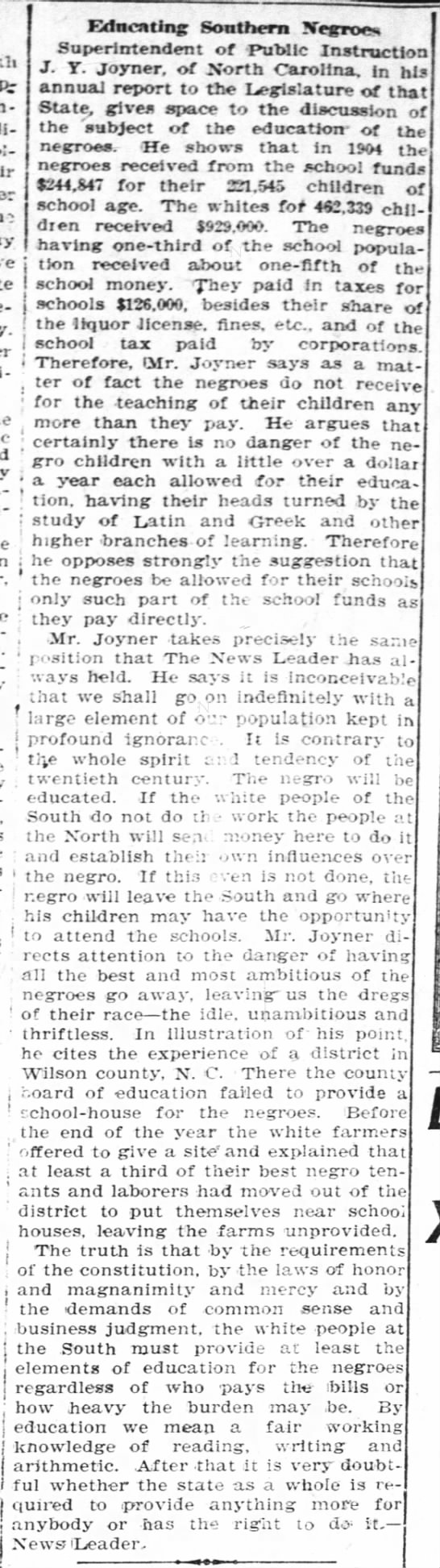
Wilmington Messenger, 4 March 1905.
A Wilmington newspaper reprinted this Richmond News Leader piece highlighting North Carolina Superintendent J.Y. Johnson’s views on the necessity of funding education for Black children. “If this is not even done, the negro will leave the South and go where his children may have the opportunity to attend the schools.”
“… In illustration of his point, he cites the experience of a district in Wilson county, N.C.. There the county board of education failed to provide a school-house for the negroes. Before the end of the year the white farmers offered to give a site and explained that at least a third of their best negro tenants and laborers had moved out of the district to put themselves near school-houses, leaving the farms unprovided.”
Lane Street Project’s public work kicked into gear in December 2020 with the discovery of Samuel H. Vick‘s long-lost grave marker. We carefully unearthed and cleaned it, and several volunteers have worked extra-diligently to uproot the layers of wisteria runners that encase it. However, wisteria fights hard, and this is what it looked like this morning.


I stumbled upon this history of the East Nash Volunteer Fire Department while searching for information about Frank W. Barnes. First, I’ll highlight the fascinating details of the career of Benjamin Mincey, the early twentieth-century chief of the Red Hot Hose Company. Then, though it happened well after the period of this blog’s focus, I’ll outline the history of inspiring story E.N.V.F.D., which carries on the 130+ year legacy of the Red Hots.
“John Mincey, one of the leaders in the [Volunteer Fire Department], gets his firemanship naturally. A teacher at Speight High School, Mincey is the son of the late Ben Mincey, long a champion of the Negro fire organization in Wilson and North Carolina.
“The elder Mincey served several years as captain of the Negro fire company with the Wilson Fire Department.
“His company, considered one of the top Negro fire-fighting companies anywhere, was appropriately dubbed ‘The Red Hot Hose, Reel and Truck Co.’
“During statewide competition, Mincey’s company virtually walked off with first prize in every contest — including reel races, truck races and fire extinguishing.
“An employe of the city fire department for nearly one-half century, Mincey died in August of 1959 [sic; 1950].
“He was carried to the Rountree Church [actually, Odd Fellows] cemetery aboard a city fire truck, and resting above his grave today is a fire hydrant, symbolic of his love for fire-fighting.
“Mincey started to work for the city fire department when there were no trucks and when the reels had to be pulled by the firemen.
“He had a fire alarm hooked up to his house and connected the main station. When it rang, he was off and pedaling his bicycle to the blaze.
“It has been said that Mincey was the fastest bicyclist in the city.
“During his service with the city, Mincey fought nearly every major major fire.
“Mincey was one of the leaders of N.C. Colored Volunteer Firemen’s Association, and worked in every department of the association.
“Before he died, he received an award for saving a family trapped in a home during a serious flood.”


Wilson Daily Times, 7 March 1965.
Now, in a nutshell, the story of E.N.V.F.D.:
In the 1950s, Clarence Hoskins, David Suggs, J.E. Williams, Henry Hagans, and L.H. Coley began meeting in a back room at Frank W. Barnes’ Sanitary Barber Shop to discuss the urgent need for firefighting services east of U.S. Highway 301. As interest grew, the group moved to Brown Chapel Missionary Baptist Church and then Rountree Missionary Baptist Church to accommodate larger gatherings.
The group sold barbecue and chicken dinners to raise money. The fire that destroyed Clarence Hoskins’ home in 1960 and other catastrophic losses spurred them in 1962 to establish a $25 per home assessment to build and equip a fire station.
In 1964, the group received a state charter as a volunteer fire department. They bought two second-hand trucks and sent them to Rocky Mount to be converted into fire engines. The next built their own building with donated labor. By then, they were $7000 in debt.
In 1965, Wilson County approved the department, added it to the county’s rural fire system, and began issuing $100 per month in funds. E.N.V.F.D. continued its weekend plate sales to retire its debt.
East Nash Volunteer Fire Department remains active, with a main facility on N.C. Highway 91 east of Wilson and a sub-station on U.S. 301.