
From the column “Doings of the Race,”

Cleveland Gazette, 11 May 1918.
For more about this incident, see here.
During a recent visit to Wilson, I drove out toward Elm City to visit with Amanda Mitchell Cameron and follow up on the delightful interview she gave me last month. At 99, Ms. Cameron is a fount of information about her part of the county, and the people and places she mentioned will keep me researching for months.
Among the topics she touched on was the fight by rural African-American parents for school buses to transport students to the new Elm City and Williamson Colored High Schools:
“That first year, we were able to get a bus. That was in ’41 that we got it. … [A]nd my second oldest brother drove the school bus, but getting those buses was not easy. My father [Kester R. Mitchell] and Phil Lindsey, Sidney Harris, Johnny Parker, Robert Mitchell, all of them joined Howard Farmer. They went to Raleigh to talk about getting a bus for these children to ride school, and Mr. Curtis, I think was the name, Mr. [Kader R.] Curtis, told him at that time, “Well, we can furnish you — what you do, you go back to you to your superintendent,” and, well, you know, at that time we had two superintendents. Elm City had a superintendent and Wilson, but Curtis was the county superintendent. He was the county. And that group of men came back at some point, from what I heard, went to Mr. Curtis, and Mr. Curtis furnished two buses. As I said, my brother drove one, and the other one was Fred Armstrong, and he lived way out what now you call 42, not 42 — Langley Road.
“… And then later on they found out that two buses were not enough to pick up. They were only picking up high school students, not the elementary students. Not grammar. You know, you had to be a high school student. And so, they added on one other bus, and that bus was to be driven by Roosevelt Sharp. …”
During my visit, Mrs. Cameron showed me a display prepared by Frederick Douglass High School students in honor of those who led the demand for buses and the early drivers, which also included Thelma Ward Williams.

Interview with Amanda M. Cameron, all rights reserved; image courtesy of Amanda M. Cameron.
Over the course of two days in October 1982, Jim Peppler took nearly 300 photographs in Wilson on behalf of the N.A.A.C.P. Legal Defense Fund. Peppler was on hand to document the fight by African-American citizens to secure representation on the Wilson County Board of Commissioners in Robert D. Haskins et al. v. The County of Wilson, North Carolina, et al. Though his photos were taken decades after the period covered in Black Wide-Awake, several of his streetscapes would have been more familiar to a Wilsonian of 1945 than of 2025, and I share them here.

This block is nearly unrecognizable now. The three-story building at right is the Odd Fellows building, built in 1894 by Samuel H. Vick.

This unpaved lane — in 1982! — is most likely Gay Street. Can anyone confirm?

All the houses on the west side of Ash Street are long gone. Though vacant, most of the houses on the east remain. The shrubbery, however, has disappeared. The sign midway down the block marked the site of Calvary Holy Church (at 118 Ash Street, a building now housing Antioch Outreach Church Ministries.)

This and related images are mislabeled “Ash Street” in the collection. Instead, they are scenes of Church Street, which runs for only one block, parallel to Nash Street. Only three houses remain on the street, all now abandoned.

Church Street today, per Google Maps Streetview.

Top: plaintiffs Jasper E. Williams, Roy Atkinson, Milton F. Fitch Sr., Roland Edwards, and Rev. Talmage A. Watkins. Bottom: attorney G.K. Butterfield Jr., lead plaintiff Robert D. Haskins, attorney Milton F. “Toby” Fitch Jr.
Peppler, Jim, “Photographs of plaintiffs and cooperating attorneys for the NAACP Legal Defense and Educational Fund (LDF) who participated in the legal case Haskins v. County of Wilson in Wilson, North Carolina,” 1982-10-09/1982-10-10, Alabama Department of Archives and History, http://digital.archives.alabama.gov/cdm/ref/collection/photo/id/37888.

Wilson Advance, 12 November 1896.
“No doubt many negroes have grown in age rapidly ….” The implication here is of voter fraud, i.e. that young Black men had inflated their ages in order to register to vote.


Pittsburgh Courier, 1 March 1924.
Daisy Adams Lampkin was a suffragist, civil rights activist, and community organizer who worked with the National Association of Colored Women, the National Association for the Advancement of Colored People, and National Council of Negro Women. Her 1924 Southern tour took her through Wilson.
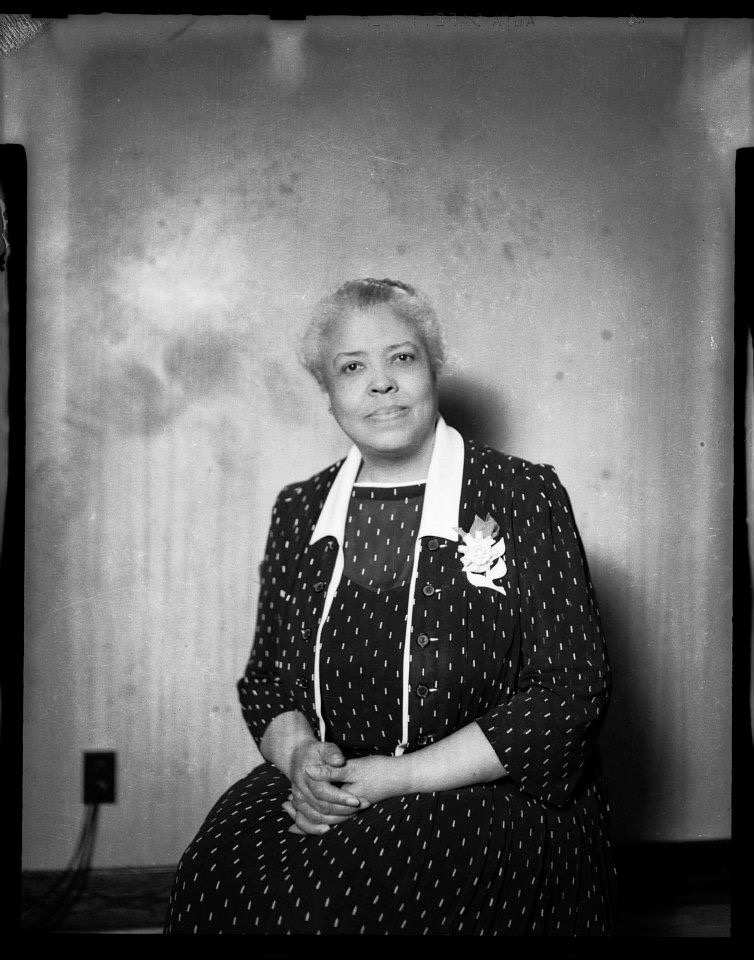
Daisy E. Lampkin, Charles “Teenie” Harris Archive, Carnegie Museum of Art.


The Wake Weekly, 12 September 2024.
——
Kudos to Rolesville! This is what community looks like. Descendants, teachers, and students — the Wake County Community Remembrance Coalition; the Historic Rolesville Society; and the mayor and town board collaborated with Alabama’s Equal Justice Initiative to commemorate the only documented lynching in Wake County, that of George Taylor in 1918.
Taylor was arrested — abducted, actually — in Wilson County and taken to Rolesville in the trunk of car. I blogged about his terrible death here.
Equal Justice Initiative partners with communities to install narrative historical markers at the sites of racial terror lynchings.
“Historical markers are a compelling tool in the creation of a permanent record of racial terror violence that provides everyone in the community exposure to our shared history of racial injustice. EJI’s historical markers detail the narrative events surrounding a specific lynching victim, or group of racial terror lynching victims, and the history of racial terrorism in America.
“Through the Historical Marker Project, local communities are motivated to confront historical trauma that is both universal and also very specific to the Black experience. EJI’s Historical Marker Projects are led by community coalitions that include individuals representing a diversity of experiences and affiliations in the local community. EJI believes that reckoning with the truth of racial violence that has shaped our communities is essential for healing.”
Two of these markers are waiting for Wilson County.

Edgecombe County’s Freedom Organization invites us to watch eastern North Carolina filmmaker Resita Cox‘s award-winning documentary “Freedom Hill: An All-Black Town on the Edge of Climate Change,” which tells the powerful story of Princeville, North Carolina.
Read about links between Wilson and Princeville here.
Add two more names to the list of people in Wilson who defied Jim Crow laws confining them to the back of the bus in 1943 — years before Rosa Parks sat down in Montgomery.
In February 1943, Wilson siblings William and Christine Hooks boarded a bus for Portsmouth, Virginia. Their friend Asilee Myers had gone to the bus station to see them off. The driver ordered William Hooks to move to the back of the bus. Hooks refused, and the bus driver ejected him. In response, the Hookses and Myers allegedly then threw gravel at the bus. The driver stopped, hopped out, and confronted William Hooks. A policeman arrived and, according to this account, Hooks jumped him before he could open his mouth good and a “young riot” broke out. The officer and the bus driver finally subdued Hooks with a black jack, and he, his sister, and their friend were arrested and charged with being drunk and disorderly and interfering with a police officer. [Personal note: I don’t believe the Hookses were intoxicated. Drunk and disorderly charges were means of criminalizing refusals to comply with unjust laws.]
All were convicted. William Hooks received a total of 36 months “on the road.” Christine Hooks got 10 months, and Asilee Myers, 30 days. I have not been able to determine the outcomes of their appeals.


Wilson Daily Times, 9 February 1943.
——
In the 1930 census of Speights Bridge township, Greene County, N.C.: farmer Charlie Hooks, 45; [second] wife Lossie, 25; children Lewis, 21, James, 19, Charlie, 17, William, x, and Christine, 9; and sisters-in-law Gather, 29, and Ethel, 20.
In the 1940 census of Wilson, Wilson County: widow Lossie Hooks, 34, cook; sister Gether Jones, 38, stemmer; children Christine, 18, cook, and William Hooks, 21, plumber; lodger Frank Allen, 20, truck driver; and daughter Dorothy G. Hooks, 9.
In the 1940 census of Wilson, Wilson County: at 116 Ashe Street, Asilee Myers, 27, nurse, born in South Carolina, and Joe Battle, 30, laborer.
In the 1950 census of Portsmouth, Virginia: Lossie Hooks, 43, domestic; daughter Christine, 28, domestic; daughters Betty Jean, 8, and Dorothy Gray, 10; and lodger Ossie Spruell, 54, widow.
William Hooks died in May 1962 in Wilson. Per his obituary, published in Wilson Daily Times on xx May 1962, he lived at 139 Narroway Street and was survived by wife Essie Mae Hooks; daughters Peggie Ann and Dorothy Mae Hooks; son William Hooks Jr.; stepmother Lossie Hooks of Portsmouth, Virginia; sister Christine Hooks of Portsmouth; brothers Charlie E. Hooks of Wilson, James Lewis Hooks of Pinetops, N.C., and John B. Hooks of Brooklyn, N.Y.
