I am ambivalent about using artificial intelligence to restore photographs. Or, more specifically, I’m concerned about manipulated photographs supplanting original images and further blurring the line between reality and misinformation. However, the allure of AI-enhanced images is strong, as I often contend with blurry, poorly lit photographs in unnatural sepia or black-and-white tones. Photographs whose condition sometimes exacerbates the distance between us and our ancestors.
I have been experimenting with ChatGPT lately, feeding it queries and images to be restored and colorized. The results are somewhat haphazard, with many images weird and off-putting. Other times, the images are breathtakingly sharp and … alive. Black Wide-Awake exists to resurrect forgotten lives, and I believe these images are valuable to help us connect with the men and women we read about in these posts. From time to time, I’ll share the better ones here, clearly marked as AI-generated.
——

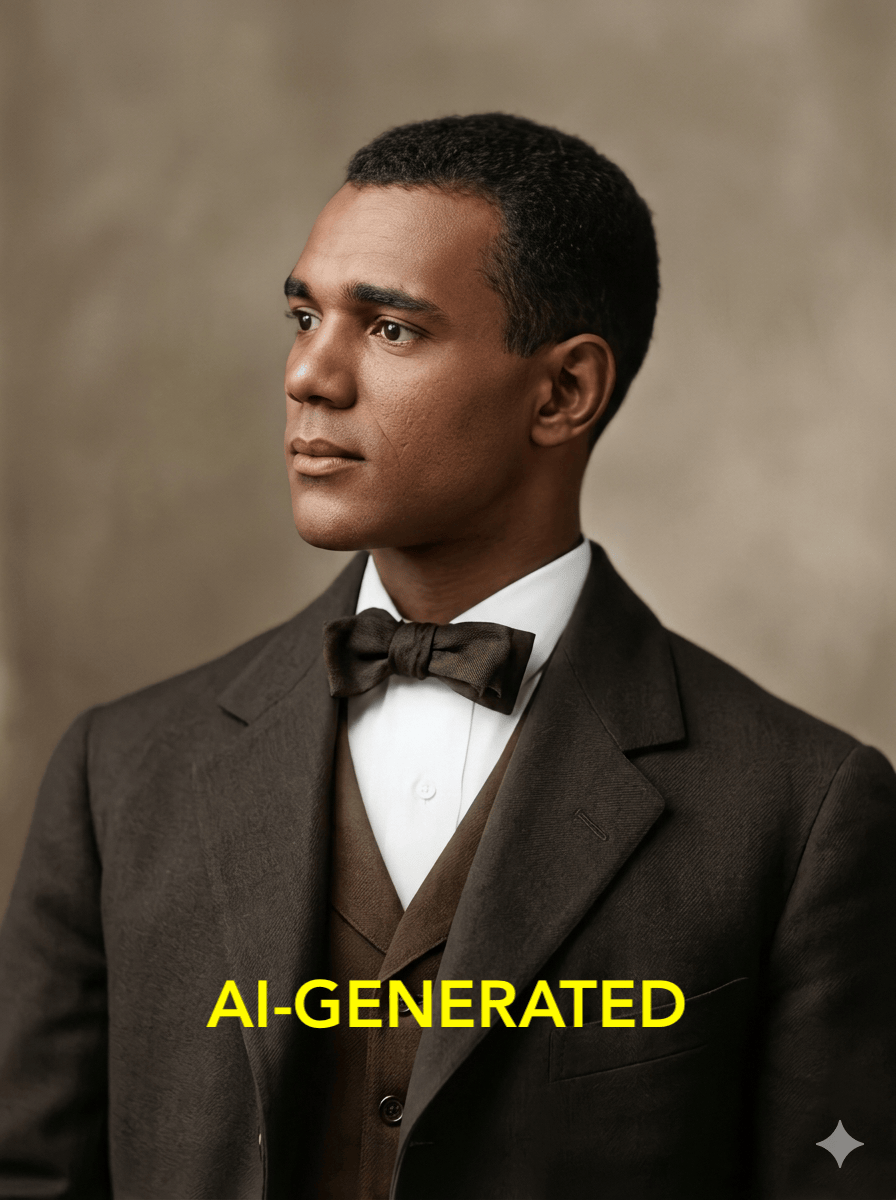
Samuel H. Vick (1861-1947), Renaissance man.
I think this AI-generated photo looks great. It only served to restore the likely original color of the photo to allow it to live on for a few more generations. This isgreat use of AI. I took Ai a step too far in an old photo and had it open the eyes on most people on the photo who had closed eyes. That photo became too weird for those who remembered the original. It taught me a lesson not to change the circumstances of the picture, only the color enhancement with AI.