Nicey Caroline Hall married Wyatt Lynch in Wilson in 1860 and seems to have spent the remainder of her life in Wilson County. However, she spent her childhood across the county line in northeast Wayne County.
In the 1850 census of the North Side of the Neuse, Wayne County: Lucy Hall, 45, with her children Sarah, 16, George, 15, Nathan, 13, Nicy, 10, Samuel, 3, and Esther, 6; plus Alford, 15, John, 14, Rhoda, 13, Julia, 12, and Rheuben Artis, 10; and Rufus Lane, 22. Next door: William Exum, a 25 year-old white farmer. The same year, per Wayne County apprentice bonds, Exum indentured the five Artis children to serve him as involuntary apprentices. (Lane had just aged out of his indenture too Exum.)
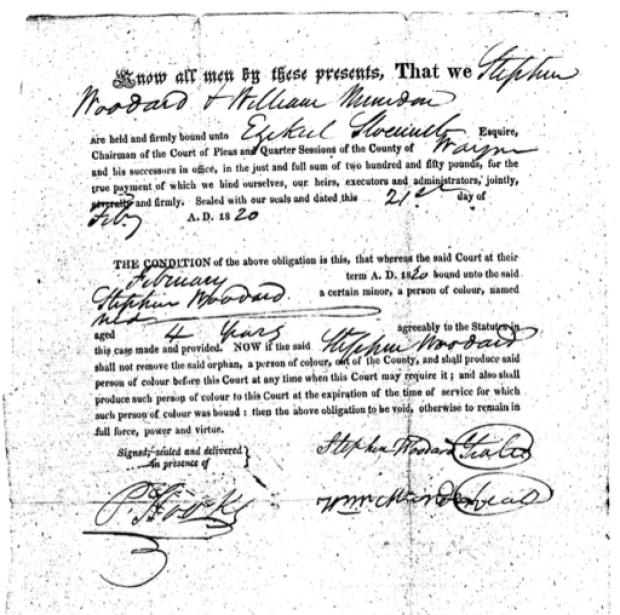
Under the laws governing the involuntary apprenticeship of free children of color, a mother could state her preference for the man to be named master of her bound children. When called to the Court of Pleas and Quarter Sessions in 1851, Lucy Hall informed the judge that she wanted her children to be bound to James Yelverton (probably Sr.) Instead, the court awarded the indentures of George, Nathan, Nicy C., Esther and Sam Hall to their neighbor, William J. Exum, on whose land they likely lived. However, the clerk neglected to record the indentures in the court minutes, and Yelverton took advantage of the oversight to have the children bound to him instead. Exum sued Yelverton, claimed that he obtained the indentures contrary to the rules of court, and the judge rescinded Yelverton’s indentures. The court then re-bound the Halls to Exum, who thereby consolidated his control over the labor of the free children of color living on his property.
The Yelvertons and Halls’ lives remained intertwined, despite the best efforts of William J. Exum. In the 1860 census of Davis district, Wayne County, James Yelverton (Jr.), 40, shared a household with Easter [Easther] Hall, 20, and her likely children Fanny, 7, and Puss, 5. Moreover, per family lore recently backed up by DNA testing, James Yelverton Jr. was the father of Nicey Caroline Hall’s first child, Susianna Frances Hall, alias Yelverton, born about 1857.
——
On 5 June 1860, Wyatt Lynch married Nicey Hall in Wilson County.
In the 1860 census of Saratoga township, Wilson County: plasterer and brickmason Wyatt Lynch, 30, wife Caroline, 23, and daughter Frances, 3.
As revealed in this letter, while he was away at war, Captain Ruffin Barnes arranged with Wyatt Lynch for his wife to live with Barnes’ wife and perform household chores. Nicey Caroline Lynch butted heads with Barnes’ wife, however, and Barnes advised that she be sent back home.
In the 1870 census of Wilson township, Wilson County: brick maker Wyatt Lynch, 48, wife Nicey, 35, and children Harriet, 4, and John, 1.
In the 1880 census of Wilson township, Wilson County: on the south side of the Plank Road, widow Nicy Lynch, 40, children Harriot, 13, John, 11, Noah, 9, Sammy, 7, and Mary Wyatt, 3, with mother-in-law Nancy Lynch, 98.
On 24 January 1899, Hattie Lynch, 33, of Wilson County, daughter of Wyatt and Nicy Lynch, married William Young, 46, of Wilson County, son of Manuel and Caroline Young of Mississippi. Primitive Baptist minister J.S. Woodard performed the ceremony.
In the 1900 census of Wilson, Wilson County: on Stantonsburg Road, widowed farmer Nicey Lynch, 60, daughters Harriet Young, 35, and Mary Rhodes, 23, and grandson John Rhodes, 2.
On 7 May 1905, Hattie Lynch, 39, daughter of John and Nicy Lynch, married Robert Dixon, 33, son of William and Charlotte Dixon, in Wilson County. Witnesses were D.F. Scott, Mary Rhoads, and Charley Edward.
On 3 December 1907, Eddie Bullock, 27, of Wilson, son of Preacher Chanson and Andy Bullock, married Mary Rhodes, 27, of Wilson, daughter of [name not given] Linch and Nicie Lynch.
In the 1910 census of Wilson, Wilson County: on Stantonsburg Road, farmer Robert Dickson, 37, wife Hattie, 46, mother-in-law Nicie Lynch, and nephew Johnnie Rhodes, 12.
Susiannah Artis died 11 September 1931 in Nahunta township, Wayne County. Per her death certificate, she was 74 years old; was born in Wilson County to Nicy Linch of Wilson County; worked in farming; and was married to Richard Artis.
Mary Wyatt Ellis died 10 October 1943 in Wilson township. Per her death certificate, she was born 16 May 1876 in Wilson County to Wyatt Linch and Nicie [last name unknown]; was married to Ruben Ellis; was a farmer; and was buried on the Lynch farm.
Harriet Hattie Dixon died 16 January 1958 in Wilson township. Per her death certificate, she was born 27 July 1865 in Wilson County to Wyatt Linch and Nicie [last name unknown]; was widowed; was a retired farmer; and was buried in a family cemetery. Hattie Anderson was informant.

Susanna Frances Yelverton Artis, daughter of Nicey C. Hall Lynch.
Documents detailing the proceedings in Exum v. Yelverton are found in Box 6, Apprentice Bonds and Records, Wayne County Records, North Carolina State Archives; photo of Susannah Artis courtesy of Teresa Artis.