I promise you — at first I did not know what I was looking at.
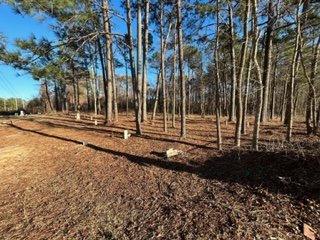
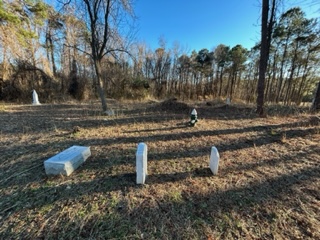
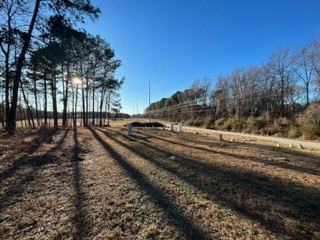
John Kirk Barnes and Thomas Ramirez stopped by Odd Fellows yesterday as the winter sun dropped low in the afternoon sky. Here’s what they saw.


Thank you.
I promise you — at first I did not know what I was looking at.
John Kirk Barnes and Thomas Ramirez stopped by Odd Fellows yesterday as the winter sun dropped low in the afternoon sky. Here’s what they saw.
Thank you.
The 1912 Wilson city directory identified three African-American music teachers in town:


In the 1900 census of Wilson, Wilson County: postmaster Samuel H. Vick, 37; wife Annie M., 28; and children Elba L., 17, and Daniel L., 3; plus cousin Bessie Parker, 15.
In the 1910 census of Wilson, Wilson County: dealer in real estate Samuel Vick, 47; wife Annie, 38; and children Elma, 17, Daniel L., 13, Samuel E., 10, George, 7, Anna, 5, and Robert, 2.
In the 1916 Hill’s Wilson, N.C., city directory: Vick Elba (c) tchr h 623 E Green
On 26 December 1921, Carlos Valle, 28, of Durham, N.C., son of Celedonio and Leticia Valle, married Elba Vick, 27, of Edgecombe County, N.C., in Rocky Mount, Edgecombe County. Methodist minister A.P. Pearce performed the ceremony.
But also: on 12 July 1922, Carlos C. Valle, 29, of Wilson, married Elba L. Vick, 25, of Wilson, in Wilson. Presbyterian minister Arthur H. George performed the ceremony in the presence of Georgia M. Burke, A.B. Bowser, and James H. Battle.
In the 1930 census of Memphis, Shelby County, Tennessee: at 572 Stephens, lodge secretary Carlos Valle, 37, born in “Porto Rico”; wife Elba, 33; and children Melba G., 6, born in New York, and Carlos Jr., 4, born in New Jersey.
In the 1940 census of New York, New York: at 111th Street, Colas Valle, 42, automobile trailer chauffeur; wife Elva, 40; and daughter Melba, 16. Carlos and Elba were described as white and born in Puerto Rico.
Elba Vick Valle died 28 December 1980 in Brooklyn, New York.
Wilson’s emergence as a leading tobacco market town drew hundreds of African-American migrants in the decades after the 1890s. Many left family behind in their home counties, perhaps never to be seen again. Others maintained ties the best way they could.
Sarah Henderson Jacobs Silver and her husband Jesse A. Jacobs Jr. left Dudley, in southern Wayne County, North Carolina, around 1905. They came to Wilson presumably for better opportunities off the farm. Each remained firmly linked, however, to parents and children and siblings back in Wayne County as well as those who had joined the Great Migration north. This post is the ninth in a series of excerpts and adaptations of interviews with my grandmother Hattie Henderson Ricks (1910-2001), Jesse and Sarah’s adoptive daughter (and Sarah’s great-niece), revealing the ways her Wilson family stayed connected to their far-flung kin. (Or didn’t.)
——
Jesse Jacobs Jr.’s first wife, Sallie Bridgers, died in 1895, shortly after the birth of their youngest child, Annie Bell. A year later, he married Sarah Daisy Henderson, who reared Sallie’s children alongside her own daughter, Hattie Mae Jacobs, and her sister’s two children, Bessie Henderson and Jesse Henderson. Jesse’s sons, James Daniel Jacobs (1881-1952), Dock Davis Jacobs (circa 1888-1944), and Reddick Jacobs (1889-1921), were grown by time my grandmother came to live with Jesse and Sarah. They were not her blood kin, but were family nonetheless. Each lived in Wilson for short stretches, with the younger two moving back and forth between North Carolina and New York City.
This is what my grandmother told me about Reddick Jacobs:
The other brother, the younger one. Reddick. He was one that got shot in the café. He was getting ready to leave, and say him and another fellow got to arguing, and the man shot him. Well, they brought him home. Papa was living then. They brought him home, and they had to bring the body up to the house. And me and [her sister] Mamie had to go examine it, you know. But I didn’t put my hands on him. I went in there and looked at him, and I said, “Well, where did he get shot?” After he was all dressed up, laying out there in the casket. And so Mamie said, she said, “Girl, don’t you see? They shot him right in his face. Right there.” And I said, “I don’t see nothing.” And then she had to put her finger right in his eye. And it was in his left eye. It went right in through there and come out the back of his head. He was sitting at the restaurant, and a fellow shot him.
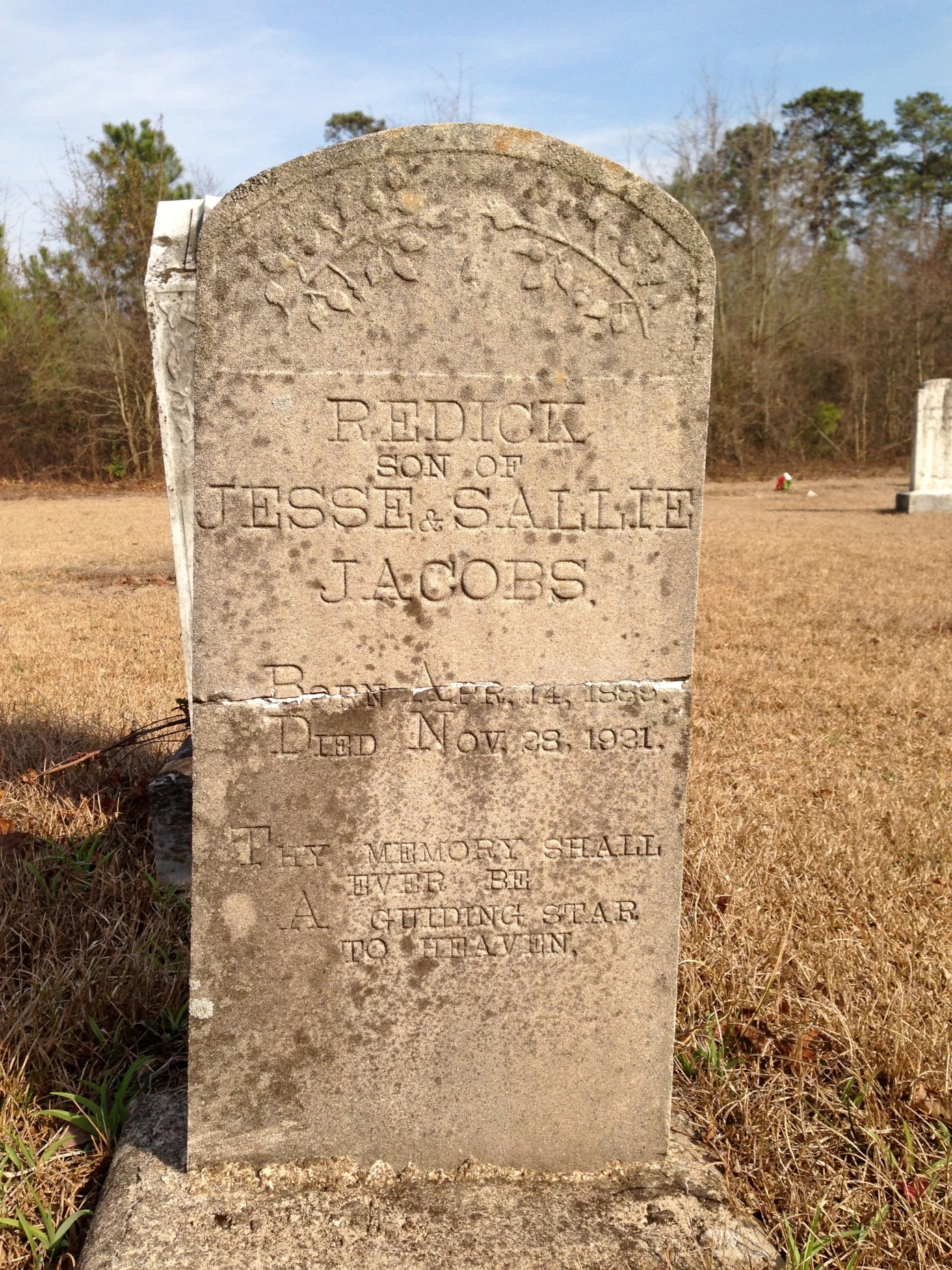
Reddick Jacobs was buried in the Congregational Church cemetery in Dudley. His patched-up headstone stands near his father’s and records his death date as 28 November 1921, but I have not yet located his death certificate.
Last night, I happened upon this brief report of a police shooting in Wilson. The victim, Howard Jacobs, died 27 November 1922.

The Johnson City Staff (Johnson City, Tenn.), 28 November 1922.
Wait. Was this the report of Reddick Jacobs’ killing? Had the reporter misheard his first name — as so often happened? Had whoever bought his headstone misremembered his death date — also common?
Coincidences notwithstanding — no. Though Reddick Jacobs’ death certificate seems to have gone unfiled, Howard Jacobs’ was recorded, and he was not the same man as Reddick.
Howard Jacob died 27 November 1922 in Wilson. Per his death certificate, he was born in December 1904 in Clinton, N.C., to Theophus Jacob [Theophilus Jacobs] and Mary I. Hobbs; was single; lived on Viola Street; and worked in farming for John Wells. His cause of death was “homicide — shot by policeman.” Jacobs was buried in Moltonville, North Carolina.
Unsurprisingly, at inquest, the policeman was cleared of any wrongdoing. I can find nothing further about Howard Jacobs’ short time in Wilson. Though he was not a son of Jesse A. Jacobs Jr., both were likely members of the same large extended Jacobs family, free people of color now closely (but not exclusively) associated with Lumbee and Coharie Indians.
We greatly appreciate The Wilson Times‘ continued coverage of Lane Street Project’s work at Odd Fellows Cemetery. Come see for yourself how far we’ve come!


Wilson Daily Times, 12 December 1919.
Playing to the negative views of the times about Black women’s hair, Newbro Manufacturing Company of Atlanta, Georgia, marketed Queen Hair Dressing to African-American women across the country.
I had believed Glenn S. McBrayer (and possibly Simeon A. Smith) to be the first African-American attorney in Wilson, but the 1908 city directory lists another — Henry Simms. Was this correct?

Simms is not listed under the heading “Attorneys at Law” in the business directory at the end of the regular edition. Nor have I found a Henry Simms in census records described as an attorney, though there were several men by that name in Wilson County in the early 1900s.
City directories were rife with errors, but I’ll reserve judgment about Simms’ status pending additional research.
The bitter wind and cold got the better of us Saturday morning, and the Senior Force made the sound decision to cancel the workday. Today, then, was all the sweeter.
Jen Kehrer and the “Junior Force” arrived early to remove trash from the roadside and to beautify the chainlink fence between Odd Fellows and Vick Cemeteries. These children chose to spend their Martin Luther King Jr. day off as a day on, and we deeply appreciate their care and contribution.

Wright Brothers arrived with the equipment and expertise needed to demolish the last big thicket in the mid-section of Odd Fellows Cemetery and to remove numerous trees. Castonoble Hooks opined that the tonnage taken out today was greater than the total of prior seasons. Briggs Sherwood also noted the day’s excellent progress and lauded Wright Brothers for their careful work amid difficult, delicate terrain.

Our next workday, in partnership with Scarborough House Resort, is January 27. Please come see our progress and help advance our reclamation of Odd Fellows Cemetery.
Please consider Wright Brothers Lawncare and Landscaping, 919-252-9130, for your professional needs. Thank you, John Kirk Barnes (of The Kirk’s Flowers, 252-299-0903) and Josiah Wright. Photos courtesy of Castonoble Hooks and R. Briggs Sherwood.

Wilson Daily Times,
Hazel Harrison was a groundbreaking African-American concert pianist. After training and performing in Europe, she took teaching jobs at Tuskegee Institute and later Howard University.
At my request, the State Historic Preservation Office of North Carolina, Division of Historical Resources, forwarded a copy of its file on Yelverton School. It’s a slim folder containing four pages: a Historic Property Survey Summary; N.C. Rosenwald School Search Form; and two print-outs from the Fisk University Rosenwald Fund Card File Database.
Yelverton School was built circa 1925 as a frame, side-gabled, two-teacher-type Rosenwald school. A front-gabled projecting wing was flanked by two recessed entries, and its windows were nine-over-nine and six-over-six sash.

The Fisk database print-outs contain two breath-taking photographs of Yelverton School, seemingly taken around the time the school was built. The first was taken straight-on, young pines standing in the background. The second shows the rear elevation.

An unidentified man approaches the school through what appears to be broomsedge.

Fisk’s Rosenwald database is undergoing digitalization; I look forward to closer examination of these images when available online.
Barber-Scotia College’s Evangeline Royall was among a multiracial group of students who lived together at a Black family’s home while working to build a credit union office for African-American farmers. A mob, led by a sawmill operator (straight out of central casting), gave white students 24 hours to get out of Columbia, North Carolina, and milled around their bus as they packed up to leave.
This news report of the incident is studiously neutral in its account of events, but carefully sets out the names and school affiliation of each student, as well as the ethnicity of non-white students like Royall.


Hope Star (Hope, Ark.), 21 August 1947.
We first met Evangeline Royall as the high school student regarded as the first “librarian” of Wilson’s Negro Library.
Per http://www.prabook.com, Evangeline Royall Darity was born 16 June 1927 in Wilson, North Carolina. She received a Bachelor of Science in Religious Education, Barber-Scotia College, 1949; Master of Education, Smith College, 1969; and Doctor of Education, University of Massachusetts-Amherst, 1978. She held various positions with the Young Women’s Christian Association, 1949-1953, and was executive director in Holyoke, Massachusetts, 1979-1981; taught in Egypt, North Carolina, and Massachusetts, 1953-1967; and was the assistant to class deans at Smith College, 1968-1975. Dr. Darity was vice-president of Student affairs at Barber-Scotia College, 1978-1979; associate dean at Mount Holyoke College, 1981-1994; and a member of the Amherst (Mass.) Town Meeting, 1971-1980. She was a member of the American Association of University Women; the American Association of Counseling and Development; the National Association of Women Deans, Counselors and Administrators; the League of Women Voters; Phi Delta Kappa; and Alpha Kappa Alpha Sorority.
Her husband, William Alexander Darity, was the first African-American to earn a Ph.D. from the University of North Carolina at Chapel Hill. Her son, William A. Darity Jr., is Samuel DuBois Cook Professor of Public Policy, African and African American Studies, and Economics at Duke University. Her daughter Janki E. Darity is an attorney.
——
In the 1940 census of Wilson, Wilson County: at 203 Pender Street, widow Ossie M. Royall, 33, an elevator girl at the courthouse; her mother Tossie Jenkins, 53, stemmer at a tobacco factory; daughters LaForest, 16, and Evauline Royall, 14; and a roomer named Ed Hart, 45, a laborer employed by the town of Wilson.
On 23 December 1950, William A. Darity, 26, of East Flat Rock, Henderson County, N.C., son of Aden Randall Darity and Elizabeth Smith Darity, married Evangeline Royall, 23, resident of “(Wilson) Charlotte, N.C.,” daughter of Dock Moses Royall and Ossie Mae Jenkins Royall, in Wilson. Presbyterian minister O.J. Hawkins performed the ceremony in the presence of Mary B. Moore, Grace L. Coley, and Solomon Revis Jr.
In the 1952 Danville, Virginia, city directory: Darity Evangeline R Mrs (c) dir Y W C A h 330 Holbrook; Darity Wm A (c; Evangeline R) insp City Dept Pub Health h 330 Holbrook

Wilson Daily Times, 20 April 1963.
Evangeline Royall Darity died 27 September 1994.